

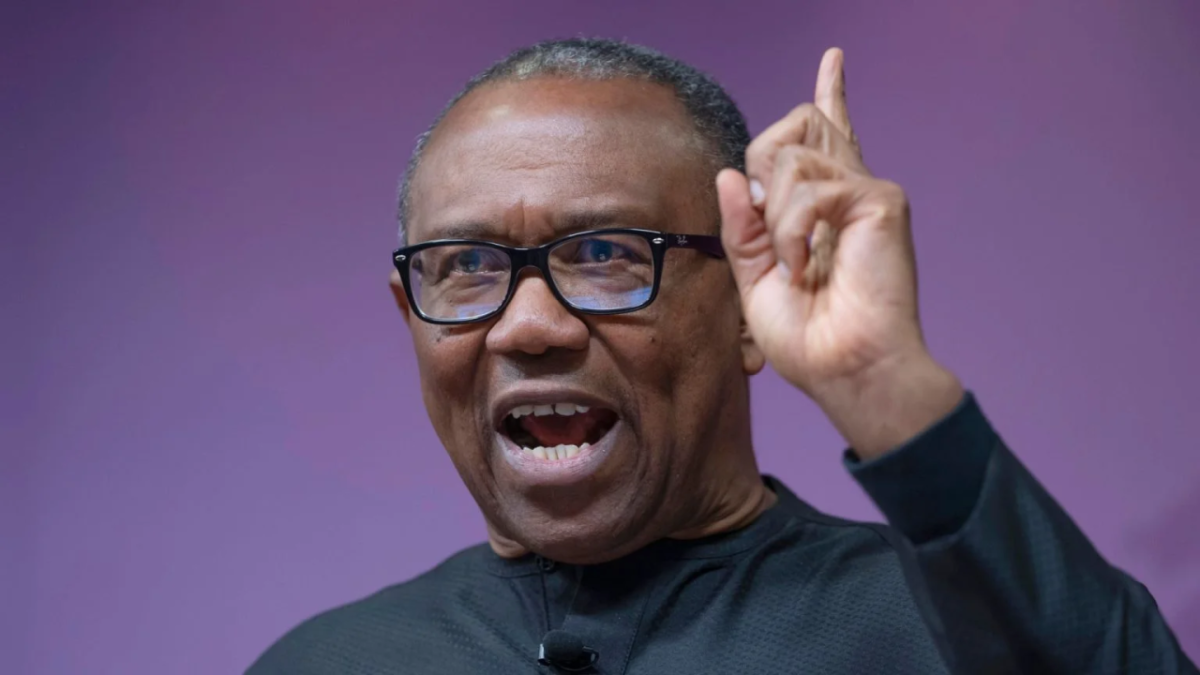
Former Labour Party presidential candidate, Peter Obi, has stated that having the support of Nigeria’s 36 state governors does not automatically guarantee electoral success, as political power ultimately rests with the people.
Obi made the remarks while responding to growing political narratives ahead of the 2027 general elections, where early alignments and coalition discussions have begun shaping the national conversation.
The former Anambra State governor emphasized that governance legitimacy and electoral outcomes cannot be determined solely by the influence of political office holders, no matter how powerful they appear within the system.
According to Obi, true democracy is driven by voters at the grassroots level, not by elite political structures or endorsements from state executives. He argued that the strength of any political movement lies in its connection with ordinary citizens who make decisions at the ballot box.
His comments come amid increasing speculation about possible alliances and political realignments among major political actors as parties begin positioning themselves for the 2027 presidential race.
Obi has remained a central figure in Nigeria’s opposition politics since his performance in the 2023 general elections, where he gained significant support, particularly among young voters and urban populations. His influence has continued to shape political discourse across the country.
In recent months, discussions around coalition-building and power consolidation have intensified, with analysts suggesting that some political blocs may rely on endorsements from governors and established political structures to strengthen their chances in 2027.
However, Obi dismissed the idea that numerical strength among governors translates directly into electoral victory, stressing that voters are increasingly independent in their political choices and less influenced by traditional power brokers.
He pointed out that Nigeria’s evolving political landscape is being shaped by economic concerns, youth engagement, and demand for accountability rather than purely party-based or elite-driven politics.
Obi’s statement reflects a broader shift in Nigerian politics, where social media engagement, civic awareness, and grassroots mobilization are playing a more prominent role in shaping public opinion.
Political analysts note that while governors still wield significant influence through party machinery and state-level structures, their ability to determine national election outcomes has been challenged in recent cycles.
The 2023 elections, in particular, demonstrated the impact of voter turnout dynamics and regional shifts, suggesting that political outcomes are increasingly difficult to predict based solely on establishment support.
Supporters of Obi have welcomed his remarks, describing them as a reflection of his consistent message that leadership should be earned through public trust rather than political endorsements.
They argue that his position reinforces the idea that Nigerian voters are becoming more politically aware and less susceptible to traditional campaign strategies that rely heavily on elite backing.
On the other hand, critics of Obi’s statement argue that governors still play a crucial role in mobilizing voters, controlling party structures, and influencing political outcomes in their respective states.
They maintain that dismissing the importance of governors may overlook the realities of Nigeria’s political system, where state-level machinery often plays a decisive role during elections.
As preparations for the 2027 general elections continue, political observers expect debates around influence, structure, and voter behavior to remain central to campaign strategies.
Coalition talks, party realignments, and early endorsements are already shaping the political landscape, with various stakeholders seeking to strengthen their positions ahead of what is expected to be a highly competitive election cycle.
Obi, however, has consistently maintained that his political philosophy is rooted in citizen engagement, accountability, and issue-based campaigning rather than reliance on political godfathers or institutional power.
He reiterated that elections are ultimately decided by the people, and no amount of political control at the state level can replace the power of the ballot.
With less than two years to the 2027 elections, Nigeria’s political environment is expected to become increasingly active, with key figures like Obi continuing to shape national debates around democracy, governance, and electoral power.


