

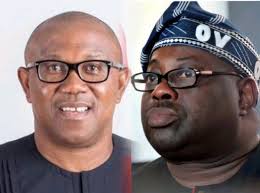
Former presidential candidate and media entrepreneur, Peter Obi, reportedly told veteran journalist and politician Dele Momodu that he considered himself more popular than former Vice President Atiku Abubakar during discussions aimed at building a political alliance ahead of Nigeria’s 2023 general elections.
Momodu made the revelation while reflecting on behind-the-scenes political negotiations that took place before the election, where opposition figures explored possible coalitions to challenge the ruling party. According to him, attempts were made to persuade Obi to align with Atiku in a joint political arrangement, but the discussions reportedly hit a stumbling block over questions of popularity and political strength.
Behind-the-Scenes Coalition Negotiations
Speaking on the matter, Momodu explained that he personally approached Peter Obi in an effort to encourage collaboration with Atiku Abubakar, who was the presidential candidate of the Peoples Democratic Party (PDP) at the time. However, Obi allegedly expressed confidence in his own growing political influence, suggesting that his popularity among Nigerian voters had surpassed that of the former vice president.
The comment, according to Momodu, became a major point of contention during the negotiation process. Obi, who eventually emerged as the presidential candidate of the Labour Party, was already experiencing a surge in support, particularly among young voters and urban populations across the country.
The 2023 election cycle marked one of the most competitive in Nigeria’s recent democratic history, with Obi’s candidacy significantly reshaping political conversations and voter engagement, especially on social media and grassroots platforms.
Rising Political Influence of Peter Obi
In the months leading up to the election, Obi’s popularity grew rapidly, driven by his campaign messaging around economic reform, accountability, and governance efficiency. His supporters, popularly known as the “Obidients,” became a visible force in political rallies and online discussions.
Momodu’s comments highlight the intensity of the political climate at the time, where traditional party structures were challenged by emerging movements and shifting voter loyalties.
Political analysts have often noted that Obi’s performance in the election demonstrated a significant departure from Nigeria’s conventional two-party dominance, even though he ultimately did not win the presidency.
Atiku’s Role and Coalition Efforts
Atiku Abubakar, a long-time political figure and former vice president, remained a central figure in opposition coalition talks leading up to the election. His candidacy under the PDP was seen as one of the strongest challenges to the incumbent administration.
However, efforts to merge key opposition forces under a single ticket did not materialize, with disagreements over leadership structure, political strategy, and public support playing a key role in the breakdown of negotiations.
Momodu’s account adds another layer to understanding why a unified opposition front failed to emerge, despite widespread calls from political commentators and civil society groups for consolidation against the ruling party.
Implications for Nigeria’s Political Landscape
The revelation underscores the evolving nature of Nigerian politics, where personality-driven campaigns and grassroots mobilization are increasingly shaping electoral outcomes. It also reflects the growing influence of public perception in political bargaining between major figures.
As Nigeria continues to navigate post-election discourse, the 2023 election remains a reference point for discussions on coalition politics, voter behavior, and the rise of third-force movements.
Momodu’s remarks are expected to reignite debates about what might have happened if opposition leaders had successfully formed a united front ahead of the election.


