

The Nigeria Customs Service (NCS) has intensified efforts to modernise its operations by engaging stakeholders in Zone C on the automation of licences and permits, urging full compliance to ensure the success of the initiative.
The engagement, held in Port Harcourt, Rivers State, forms part of the broader e-Customs modernisation drive spearheaded by the Comptroller-General of Customs, Bashir Adewale Adeniyi. The reforms are aimed at streamlining cargo clearance processes, boosting revenue generation, curbing smuggling, and enhancing trade facilitation.
Push for Modernisation
Speaking at the event, the Comptroller in charge of Licences and Permits, NJ Anozie, described the automation initiative as a key milestone in the Service’s innovation-driven transformation.
She noted that the reform aligns with the Comptroller-General’s three-point agenda of consolidation, collaboration, and innovation, adding that the Customs Service is positioning itself in line with global best practices in customs administration.
Anozie emphasised that the automation of licence acquisition and renewal processes would significantly improve efficiency within the maritime sector.
Expected Benefits
According to Customs officials, the digital platform is expected to:
- Simplify procedures for obtaining and renewing licences
- Reduce operational stress for agents and Customs officers
- Lower the cost of doing business
- Enhance transparency and accountability
- Minimise fraud through automated document verification
Anozie explained that the system would automatically detect and reject fake documents while accepting genuine submissions, thereby reducing opportunities for manipulation.
She also highlighted that the platform enables officers to verify whether applicants have outstanding financial obligations before processing licences, ensuring greater compliance.
Call for Stakeholder Cooperation
Customs authorities stressed that the effectiveness of the new system depends heavily on the cooperation of both officers and stakeholders.
Anozie urged participants to embrace the innovation, describing it as “simple and seamless,” while noting that officers across commands had already undergone training on the system.
She also called on the media to help raise awareness about the initiative.
Institutional Reform and Oversight
Delivering a keynote address on behalf of the Deputy Comptroller-General of Customs (Tariff and Trade), CK Niagwan, the Customs Area Controller of Port Harcourt Area 1 Command, Salamatu Atuluku, described the automation as a deliberate institutional reform.
She noted that effective licensing processes are central to Customs operations, ensuring proper regulation, compliance verification, and operational integrity within the system.
According to her, the new platform introduces a structured digital workflow covering application, verification, approval, renewal, and monitoring processes, while also standardising registration through Tax Identification Number verification.
She added that the system would enhance accountability by requiring officers to provide documented reasons for approvals, queries, or rejections.
Strengthening Accountability
At the headquarters level, further scrutiny will ensure uniformity across commands, with applications subjected to structured reviews before final approval.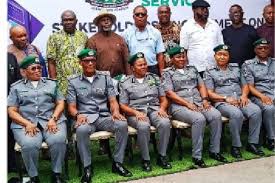
Officials said licences would be categorised into active, expired, blocked, or rejected for effective monitoring, reinforcing administrative discipline and reducing uncertainty.
Niagwan stressed that while technology is central to the reform, discipline and professionalism remain critical to its success.
Support from Zonal Leadership
In her goodwill message, the Comptroller of Administration at Zone C Headquarters, Ifeyinwa Edebeatu, described the initiative as a transformative step toward efficiency, transparency, and accountability.
She noted that the global trend in customs administration increasingly relies on technology to reduce human interaction, simplify procedures, and improve compliance.
Stakeholder Reactions
Participants at the event, including representatives of freight forwarders, terminal operators, and shipping companies, welcomed the initiative but called for the removal of operational bottlenecks to ensure seamless implementation.
The engagement featured technical presentations, interactive sessions, and discussions aimed at addressing stakeholder concerns.
Looking Ahead
As the Nigeria Customs Service continues its digital transformation, officials say sustained compliance and collaboration will be critical to achieving the desired outcomes of improved service delivery and enhanced trade facilitation.
The initiative is expected to play a key role in aligning Nigeria’s customs operations with international standards while strengthening the country’s economic framework.


