

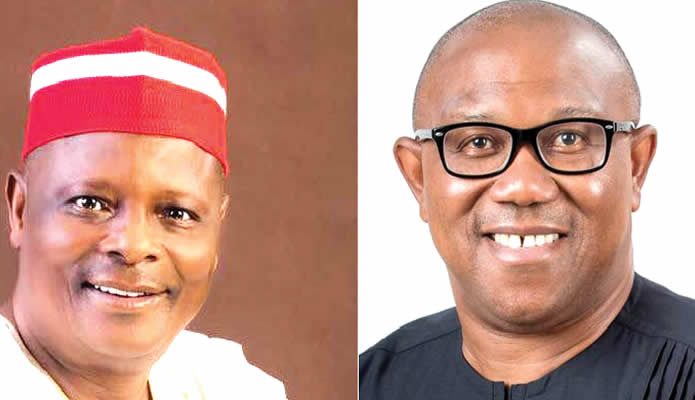
Former Kano State governor Rabiu Kwankwaso has expressed willingness to serve as running mate to Peter Obi in the 2027 presidential election if chosen by their political platform.
Kwankwaso made the disclosure during an interview on Arise News aired on May 11, where he spoke about ongoing political realignments and coalition discussions ahead of the next general elections.
According to him, northern political stakeholders involved in recent consultations concluded that Obi represented the most viable partner capable of driving meaningful national progress and strengthening opposition unity. Kwankwaso stated that he would be prepared to accept the vice-presidential position if the party deemed it necessary for broader political success.
His remarks come shortly after both leaders were linked with the Nigeria Democratic Congress (NDC), following reports of their departure from the African Democratic Congress (ADC) amid internal disagreements and leadership disputes.
The prospect of an Obi-Kwankwaso ticket has generated significant reactions across Nigeria’s political landscape. Supporters of the proposed alliance argue that it could create a formidable political force by combining Obi’s popularity among young and urban voters with Kwankwaso’s strong grassroots influence in northern Nigeria, particularly through the Kwankwasiyya movement.
Many opposition supporters view the possible partnership as a strategic attempt to bridge regional divides and consolidate anti-establishment sentiments ahead of 2027. Social media platforms have since been flooded with discussions, campaign-style graphics, and debates about the electoral viability of such an alliance.
However, the development has also attracted criticism from some political figures and commentators. Former presidential candidate Omoyele Sowore reportedly questioned Kwankwaso’s leadership credentials and the sincerity of the emerging coalition.
Additionally, some northern commentators and political stakeholders have criticized the move, describing it as a departure from regional political expectations. Others, however, insist that national interest and competence should outweigh ethnic or regional calculations in determining political alliances.
Political analysts note that coalition-building efforts are likely to intensify as opposition figures seek ways to challenge the ruling establishment in 2027. They also caution that while public declarations of support are important, sustaining a durable alliance will require agreement on ideology, power-sharing, party structure, and campaign strategy.
For now, Kwankwaso’s openness to serving under Obi marks one of the clearest indications yet of possible opposition cooperation ahead of the next election cycle, further reshaping conversations around Nigeria’s evolving political future.


