

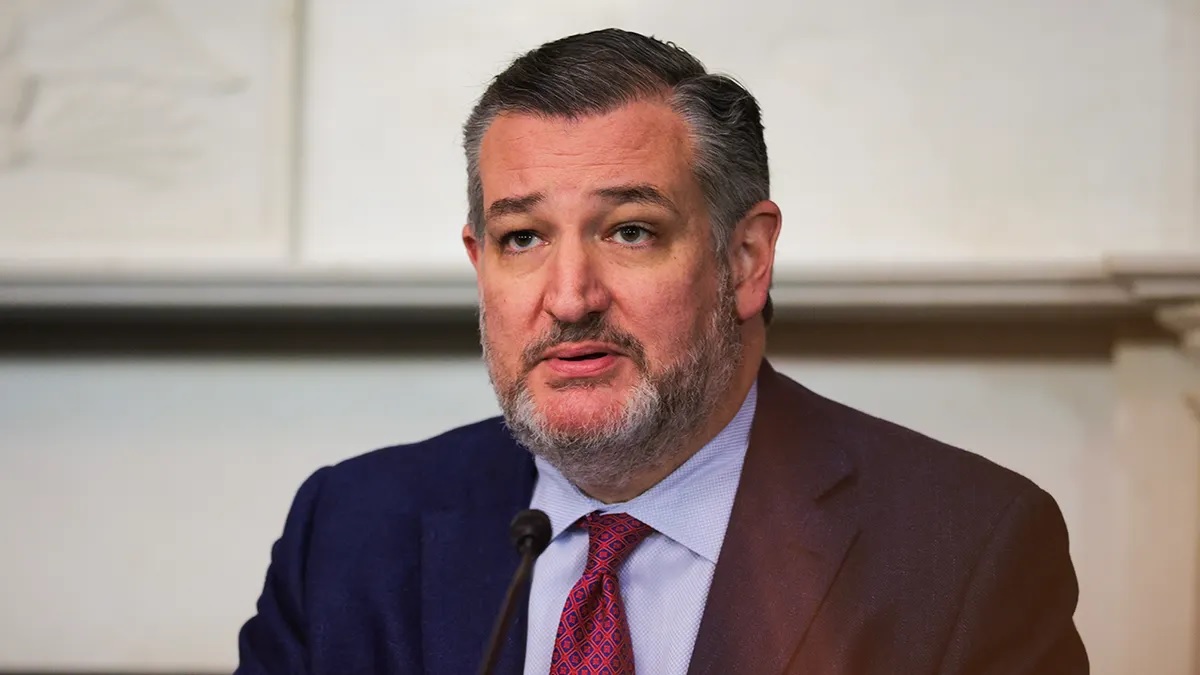
A diplomatic storm is brewing between Washington and Abuja after U.S. Senator Ted Cruz accused the Nigerian government of complicity in the killing of Christians, citing what he described as a pattern of faith-based violence spanning more than a decade.
Speaking on April 21, 2026, Cruz referenced advocacy data claiming that over 50,000 Christians have been killed in Nigeria since 2009. He also pointed to recent attacks during the Holy Week period, in which more than 150 people—many identified as Christians—were reportedly killed in coordinated assaults across parts of the country.
The senator argued that the scale and persistence of the violence demand stronger international action. He is currently pushing legislation known as the Nigeria Religious Freedom Accountability Act, which seeks to impose sanctions on Nigerian officials deemed responsible for violations of religious freedom. The proposed measure also calls for Nigeria to be redesignated as a “Country of Particular Concern,” a classification used by the United States to identify nations with severe religious freedom violations.
Cruz’s remarks have, however, been firmly rejected by Nigerian authorities, who describe the allegations as misleading and politically motivated. Officials insist that the violence in Nigeria is complex and cannot be reduced to a single religious narrative. According to them, the country is battling a multifaceted security crisis involving banditry, insurgency, and communal conflicts that affect citizens across religious and ethnic lines.
Government representatives argue that groups such as Boko Haram and Islamic State West Africa Province have targeted both Christians and Muslims in their campaigns of violence. They also point to ongoing military operations aimed at dismantling these groups and restoring stability, particularly in the northeast and parts of the north-central region.
“The narrative that Nigeria is complicit in targeting Christians is not only inaccurate but undermines the sacrifices of our security forces,” a government source stated. “We are confronting criminals and terrorists who do not discriminate in their brutality.”
The controversy has reignited international debate over the nature of Nigeria’s security challenges. While some human rights organizations support Cruz’s position, arguing that religious minorities face disproportionate risks in certain regions, others caution against oversimplification. Analysts note that factors such as land disputes, economic hardship, and governance gaps often intersect with religious identities, making the conflict more complex than a purely sectarian issue.
Diplomatic observers warn that escalating rhetoric could strain relations between the United States and Nigeria, particularly if legislative measures lead to sanctions or other punitive actions. Such developments could have implications for security cooperation, trade, and broader geopolitical alignment.
At the same time, the issue has sparked renewed calls within Nigeria for a more robust and transparent response to insecurity. Civil society groups are urging the government to intensify efforts to protect vulnerable communities, improve intelligence gathering, and ensure accountability for perpetrators of violence.
As the debate continues, the central question remains unresolved: how to accurately define and effectively address the violence that has claimed thousands of lives across Nigeria. For now, Cruz’s accusations and Nigeria’s rebuttal have brought the issue into sharper global focus, highlighting both the urgency of the crisis and the challenges of interpreting it.


