

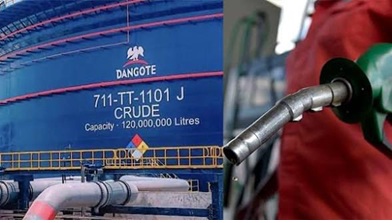
Dangote Petroleum Refinery has resumed the sale of Premium Motor Spirit (PMS), commonly known as petrol, in naira, setting a new ex-depot price of ₦1,215 per litre at its Lekki refinery, following a temporary period of dollar-denominated transactions.
The refinery’s decision marks a return to the Federal Government’s naira-for-crude initiative, under which domestic refiners purchase crude oil in naira and sell refined petroleum products in the local currency. However, the new ex-depot price represents a significant increase from the previous ₦1,075 per litre, reflecting rising global crude oil prices.
Industry sources attribute the adjustment primarily to the recent surge in international crude prices, with Brent crude climbing to approximately $93.90 per barrel amid heightened geopolitical tensions and concerns over global supply disruptions.
Before resuming naira transactions, the refinery had temporarily priced petrol in U.S. dollars, with products reportedly sold at $1,161.23 per metric tonne, citing prevailing market conditions and international pricing dynamics.
The latest increase reverses the downward trend seen in June, when ex-depot prices had fallen to around ₦1,000 per litre, raising hopes of more affordable fuel for consumers and businesses.
The adjustment is expected to influence retail pump prices nationwide, with petroleum marketers indicating that filling stations may increase pump prices to between ₦1,300 and ₦1,360 per litre, depending on transportation costs, distribution margins and regional market conditions.
The announcement has generated mixed reactions among Nigerians. Many consumers expressed concern over the renewed increase, arguing that higher fuel prices could further raise transportation costs, food prices and the general cost of living.
Some commentators also questioned why fuel prices appear to rise rapidly when crude oil prices increase but often decline more gradually when international oil prices fall.
Others, however, welcomed the refinery’s decision to resume naira sales, expressing optimism that increased local supply could help reduce fuel shortages, improve product availability and lessen dependence on imported petroleum products.
Energy analysts note that domestic fuel prices remain closely linked to international crude oil prices, exchange rate movements and distribution costs, despite increased local refining capacity. They explain that fluctuations in global energy markets continue to influence production costs and pricing decisions.
Economists caution that sustained increases in fuel prices could place additional pressure on inflation, transportation costs and household purchasing power, particularly at a time when many Nigerians continue to face economic challenges.
The Dangote Refinery, one of Africa’s largest refining facilities, is widely regarded as a critical component of Nigeria’s efforts to achieve greater energy security and reduce reliance on imported refined petroleum products. Stakeholders believe that as production stabilises and distribution networks expand, the refinery could play a significant role in improving long-term fuel supply.
Industry experts have called for greater transparency in fuel pricing and continued collaboration among the Federal Government, refiners and marketers to ensure that the benefits of increased domestic refining are passed on to consumers where market conditions permit.
As global oil markets remain volatile, observers expect fuel prices to continue responding to changes in crude oil costs, exchange rates and domestic supply conditions. The resumption of naira sales is nonetheless seen as an important step in advancing Nigeria’s local refining agenda while supporting the broader objective of strengthening the country’s downstream petroleum sector.


