

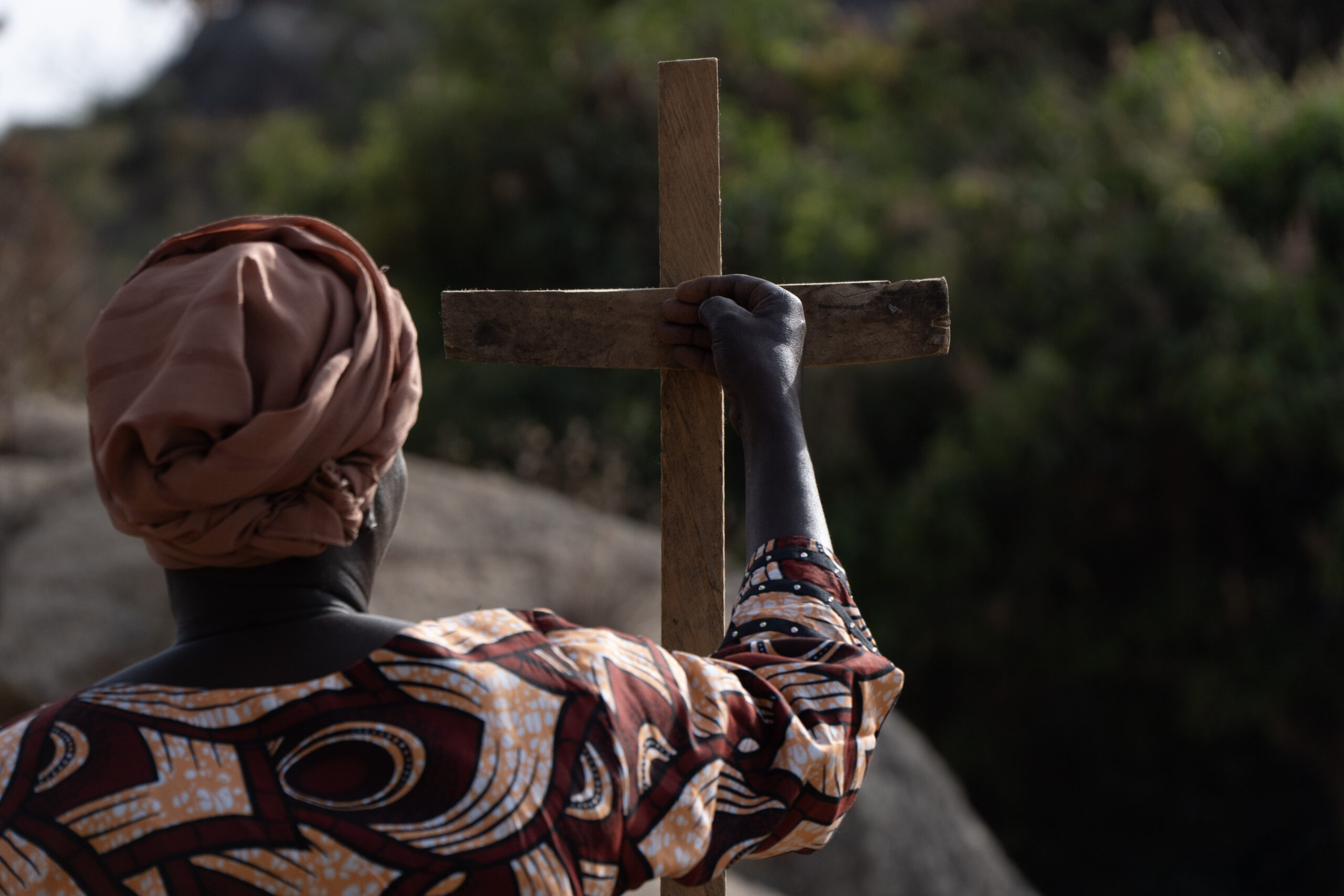
A deeply emotional testimony by a Nigerian widow has reignited international and domestic debate over the nature of violence in the country’s North central/Middle Belt, following the circulation of a video report that details a brutal attack on her family.
The video, broadcast by Channel 4 News, features the unnamed woman recounting how armed intruders stormed her home, killing her husband, her 10-month-old infant, and another child, while leaving her with severe injuries. The incident, which reportedly occurred in Nigeria’s Middle Belt region, has drawn widespread attention due to its graphic and tragic nature.
According to the widow’s account, the attackers arrived without warning, unleashing violence that has become disturbingly familiar in parts of central Nigeria. Her testimony has since been shared widely online, sparking outrage and renewed calls for action to address insecurity in affected communities.
The Middle Belt, particularly states such as Plateau State and Benue State, has long been a flashpoint for conflict involving farmers and herders, often intertwined with ethnic and religious tensions. Some advocacy groups attribute the violence to armed Fulani militias, alleging a pattern of targeted attacks, including killings, church burnings, and mass displacement.
Data cited from the World Watch List 2026 by the organization Open Doors suggests that such violence has led to thousands of deaths in recent years, in some cases surpassing casualties attributed to insurgent groups like Boko Haram. The report ranks Nigeria among the most dangerous countries for Christians, a claim that has intensified global scrutiny.
The issue has also reached the international political arena. Recently, U.S. Senator Ted Cruz cited figures indicating that more than 50,000 Christians have been killed in Nigeria since 2009. He called for Nigeria to be redesignated as a “Country of Particular Concern,” a move that could trigger sanctions and increased diplomatic pressure.
However, Nigerian authorities have consistently rejected the characterization of the violence as religious persecution. Government officials argue that the crisis is more accurately described as a complex mix of banditry, resource conflicts, and criminal activity affecting both Muslims and Christians alike. They maintain that security forces are actively working to address the threats and restore order in affected regions.
Security analysts caution that while religious identity may play a role in some incidents, the broader context includes competition over land, climate pressures, and weak local governance structures. These factors, they say, contribute to cycles of violence that are difficult to resolve through simplistic narratives.
The widow’s testimony, nevertheless, has struck a powerful chord, putting a human face on statistics that often feel abstract. For many observers, it underscores the urgent need for more effective protection of civilians, regardless of the underlying causes of the conflict.
Human rights organizations have called for thorough investigations into such attacks, as well as greater accountability for perpetrators. They also emphasize the importance of supporting victims and rebuilding communities devastated by repeated violence.
As Nigeria continues to grapple with multiple security challenges, the renewed attention brought by this testimony highlights both the scale of the crisis and the urgency of finding lasting solutions. For the widow and countless others affected, the demand is simple yet profound: safety, justice, and the chance to rebuild lives shattered by violence.


