

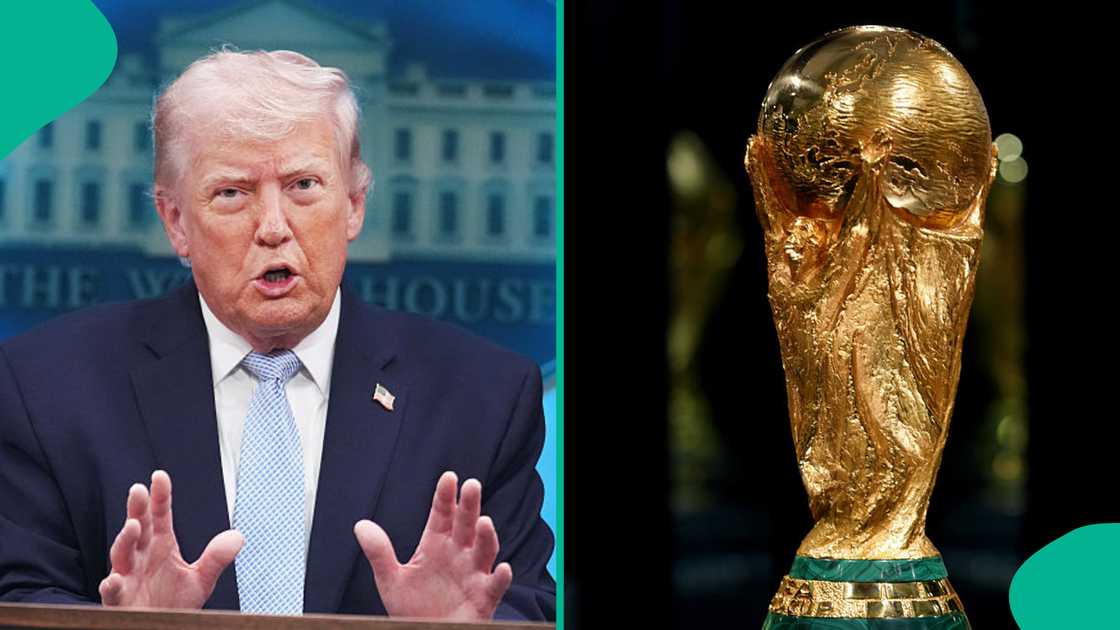
A fresh geopolitical twist has entered the world of football after reports emerged that the United States has indicated a potential replacement for Iran ahead of the 2026 FIFA World Cup, should the Middle Eastern nation fail to participate.
According to multiple international reports, a senior envoy linked to former U.S. President Donald Trump has urged FIFA to consider replacing Iran with Italy in the upcoming tournament.
The proposal, though not an official FIFA decision, has sparked widespread debate across the football and political landscape. Italy, a four-time World Cup champion, failed to qualify for the tournament through the normal qualification process but is now being floated as a possible substitute due to its football pedigree and global appeal.
The development comes amid ongoing geopolitical tensions involving Iran and the United States, which have raised concerns about Iran’s participation in a tournament co-hosted by the U.S., Canada, and Mexico. Iran had earlier expressed reservations about playing matches on U.S. soil and even requested a relocation of its fixtures—requests that FIFA has so far declined.
Despite the speculation, Iranian authorities have maintained that the country intends to participate in the tournament, with officials reaffirming their commitment to competing on the global stage.
Football analysts, however, point out that replacing a qualified team is not a straightforward process. Under FIFA rules, if a team withdraws, the replacement would typically come from the same continental confederation—in this case, Asia—rather than Europe, where Italy belongs.
This has led many experts to question the practicality of the U.S.-linked proposal. “While Italy’s football history is undeniable, FIFA operates within structured regulations,” one analyst noted. “Any replacement would likely follow confederation guidelines, not political suggestions.”
The reported move is also seen by some observers as part of broader diplomatic maneuvering. Reports suggest the proposal could be tied to efforts to improve relations between Washington and Rome, particularly involving Italian leadership.
For fans, the situation has created a mix of excitement and confusion. Italy’s potential inclusion would undoubtedly boost the tournament’s profile, but it also raises concerns about fairness and the integrity of the qualification process.
Meanwhile, FIFA has not issued any official statement confirming that Iran will be replaced or that Italy is being formally considered. The governing body continues to emphasize that Iran remains a qualified participant and that tournament preparations are proceeding as scheduled.
As the 2026 World Cup draws closer, the uncertainty surrounding Iran’s participation highlights how global politics can intersect with international sports. For now, the idea of Italy replacing Iran remains speculative—but it has already succeeded in capturing global attention.
The final decision, however, rests solely with FIFA, and until any formal announcement is made, Iran’s place in the tournament remains intact.


