

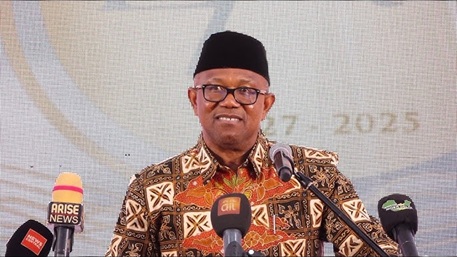
The presidential candidate of the Nigeria Democratic Congress (NDC) for the 2027 election, Peter Obi, has sparked widespread debate after urging Nigerians to take greater responsibility for protecting their votes during elections, arguing that voter apathy and weak citizen participation contribute significantly to electoral malpractice.
Obi made the remarks during an engagement with Nigerians in the United States, where he discussed the state of Nigeria’s democracy, electoral integrity, and the responsibilities of citizens in strengthening democratic institutions.
Addressing supporters, the former Anambra State governor emphasized that voters must remain vigilant throughout the electoral process rather than casting their ballots and immediately leaving polling units.
According to him, safeguarding elections requires active citizen participation before, during, and after voting. He argued that Nigerians should not rely solely on faith, political parties, or institutions to protect their votes but must personally commit to ensuring that electoral outcomes reflect the will of the people.
The comments quickly generated reactions across political and social circles, with supporters and critics offering differing interpretations of his message.
Many supporters agreed with Obi’s position, arguing that widespread voter disengagement has historically created opportunities for manipulation, vote tampering, and electoral fraud. They contended that active monitoring by voters, party agents, observers, and civil society groups remains one of the most effective safeguards against electoral malpractice.
Some supporters also pointed to successful examples in which citizen vigilance at polling units helped ensure transparency in vote counting and result collation.
However, critics accused Obi of placing excessive responsibility on voters rather than addressing systemic shortcomings within Nigeria’s electoral process.
Opponents argued that many Nigerians who experience electoral irregularities are often victims rather than enablers of the problem. They cited incidents from previous elections involving voter intimidation, violence, logistical failures, and technical challenges associated with result transmission systems.
Several commentators referenced controversies surrounding the 2023 general election, including concerns over the performance of the Independent National Electoral Commission (INEC)’s electronic systems and allegations of voter suppression in some locations.
According to critics, expecting ordinary citizens to single-handedly prevent electoral manipulation ignores the duty of electoral institutions and security agencies to guarantee credible elections.
Beyond electoral matters, Obi also addressed broader national issues during the visit. He reiterated his longstanding position on dialogue and national reconciliation, calling for the release of detained Indigenous People of Biafra (IPOB) leader Nnamdi Kanu and advocating engagement with various agitating groups across the country.
The former governor argued that sustainable peace and national unity require constructive dialogue rather than purely coercive responses to political grievances.
His comments come at a time when political activities are gradually intensifying ahead of the 2027 general elections, with parties positioning themselves and potential candidates outlining their visions for the country.
Political analysts say the remarks reflect growing concerns about voter participation, electoral credibility, and citizen engagement as Nigeria prepares for another electoral cycle. They note that debates surrounding electoral reforms, election security, voter education, and institutional accountability are likely to remain central themes in the build-up to the polls.
With the 2027 election still months away, Obi’s intervention has reignited discussions about the role of citizens in defending democracy and the extent to which electoral integrity should depend on public vigilance versus institutional effectiveness.
As reactions continue to pour in, the debate underscores a broader national conversation about how best to strengthen Nigeria’s democratic process and ensure that every vote truly counts.


