

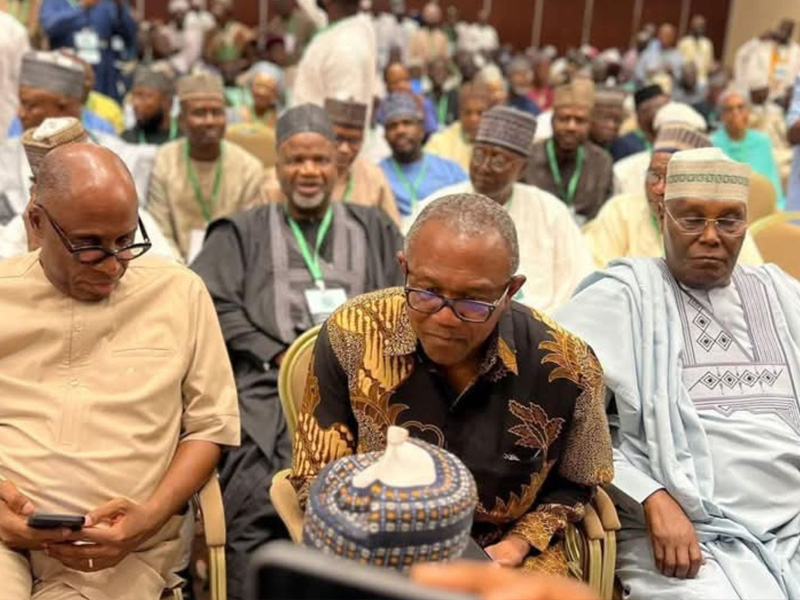
Supporters of Peter Obi and Atiku Abubakar are locked in an intensifying debate over who should lead Nigeria’s opposition challenge against President Bola Tinubu in the 2027 general elections.
The growing divide, largely playing out across social media and political circles, reflects deeper tensions within the opposition as various blocs attempt to position their preferred candidate as the most viable contender.
Obi’s supporters, popularly known as “Obidients,” argue that the former Anambra State governor represents a new political direction. They point to his strong appeal among young voters, urban populations, and Nigerians in the diaspora, many of whom are disillusioned by the country’s economic challenges, including rising inflation and unemployment.
For this group, Obi embodies a break from what they describe as “old politics,” with critics of Atiku emphasizing his long political career and questioning whether he represents the kind of change many Nigerians are seeking.
On the other hand, Atiku’s supporters highlight his extensive political network and institutional backing, particularly among governors, lawmakers, and party structures. They argue that winning national elections in Nigeria requires not just popularity, but also a well-established political machinery capable of mobilizing voters across regions.
Historical election data has further fueled the debate. Supporters of Atiku often reference the 2019 presidential election, where he secured over 11 million votes with Obi as his running mate. In contrast, Obi’s solo bid in 2023 yielded just over 6 million votes—figures that Atiku’s camp uses to question Obi’s nationwide electoral strength.
However, Obi’s backers counter that the 2023 election marked a significant shift, arguing that his performance, despite limited party structure, demonstrated organic support that could grow stronger with a broader coalition.
The debate is unfolding against the backdrop of ongoing discussions about opposition unity, particularly within platforms like the African Democratic Congress (ADC), where Obi officially registered in March 2026. Talks of forming a single opposition front have gained momentum, with many stakeholders warning that a divided opposition could once again hand an advantage to the ruling party.
Political analysts note that the situation mirrors the 2023 elections, where fragmented opposition votes contributed to Tinubu’s victory. As such, the question of who leads the coalition is not merely symbolic but central to its electoral prospects.
“The challenge is balancing popularity with structure,” one analyst observed. “Both candidates bring different strengths, but without unity, those strengths may cancel each other out.”
Despite the tensions, there are indications that key figures within the opposition are working behind the scenes to broker compromises and build consensus around a single candidate.
As Nigeria moves closer to the 2027 elections, the outcome of this internal contest could prove—not just for the opposition, but for the broader trajectory of the country’s political landscape.
For now, the rivalry between Obi and Atiku supporters underscores both the vibrancy and the fragility of Nigeria’s opposition politics, where unity remains the ultimate test.


