

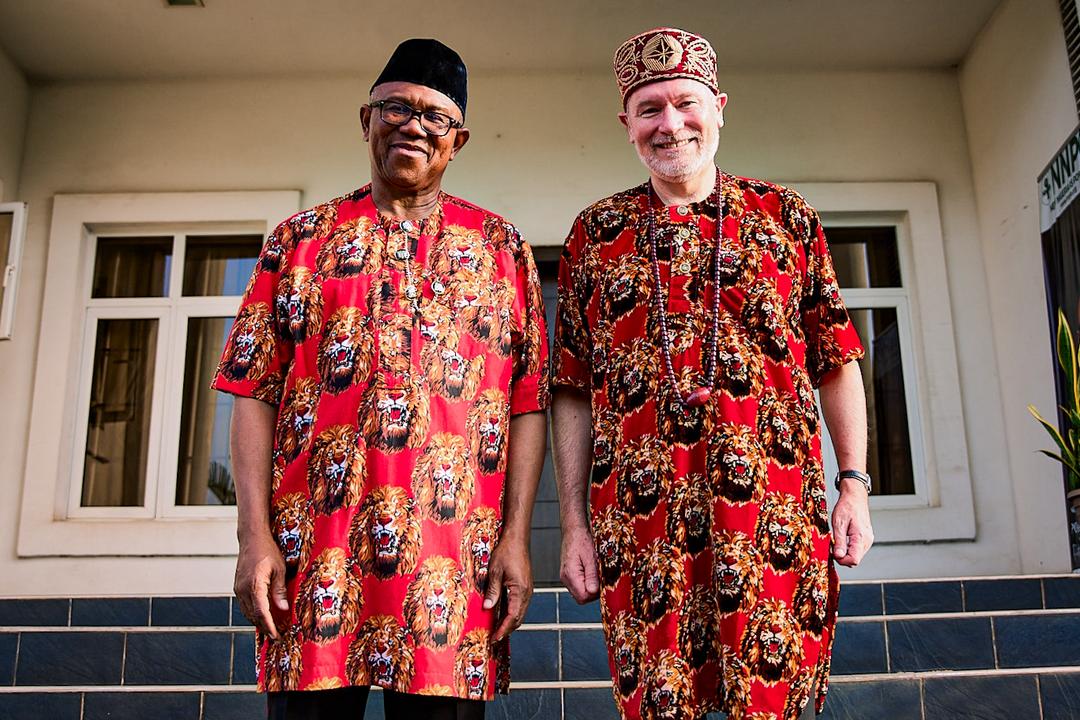
Former presidential candidate Peter Obi has once again drawn national attention after hosting the European Union Ambassador to Nigeria, Samuela Isopi Mignot, in a culturally symbolic meeting where both parties appeared in traditional Igbo attire.
The meeting, held on Wednesday, featured Obi alongside close associates warmly receiving the envoy in what he described as a “rich and enriching engagement.” Photographs from the visit, which quickly circulated online, showed participants dressed in traditional outfits, a gesture widely interpreted as a celebration of Nigerian cultural identity and soft diplomacy.
Obi later noted that the discussions with the ambassador were “useful and forward-looking,” though specific details of the conversation were not publicly disclosed. Observers believe the meeting likely touched on governance, economic cooperation, and Nigeria’s evolving political landscape, particularly as the country looks ahead to the 2027 general elections.
The engagement is the latest in a series of diplomatic interactions involving Obi, who has recently met with representatives from several Western nations, including United Kingdom, Germany, Canada, and France. These meetings have been viewed by supporters as part of a broader effort to build international relationships and present a coherent vision for Nigeria’s future.
Politically, the timing of the meeting is significant. Obi is currently associated with the African Democratic Congress (ADC), where he is widely seen as a key figure in the emerging opposition coalition ahead of the 2027 elections. His growing diplomatic engagements have fueled speculation about his strategy to position himself as a global-facing leader capable of attracting international confidence.
Supporters argue that such interactions signal increasing recognition of Obi’s influence beyond Nigeria’s borders. They point to his recent outreach efforts, including a gathering with northern elders, as evidence of a deliberate attempt to build national unity across regional and political divides.
“This is about projecting Nigeria positively and building bridges,” one supporter commented. “Engaging with global partners while celebrating local culture sends a powerful message.”
However, reactions to the meeting have been mixed. While many praised the cultural symbolism and diplomatic outreach, critics questioned the substance of the engagements, arguing that optics alone cannot substitute for concrete policy proposals. Some commentators also expressed concern over the politicization of diplomatic interactions, suggesting that such meetings should remain strictly within official government channels.
Analysts note that in modern politics, symbolism and perception often play a crucial role alongside policy. The use of traditional attire in diplomatic settings can serve as a tool for cultural diplomacy, reinforcing national identity while fostering mutual respect between nations.
The European Union, a key development partner for Nigeria, has consistently engaged with a wide range of political and civil society actors in the country. Meetings with opposition figures are not unusual and are often part of broader efforts to understand local dynamics and promote democratic governance.
As Nigeria moves closer to another election cycle, the intersection of diplomacy, culture, and politics is likely to become more pronounced. For Peter Obi, the latest engagement adds to a growing portfolio of both domestic and international interactions—each contributing to the narrative shaping his political journey.
Whether viewed as strategic diplomacy or political theatre, the meeting underscores an evolving landscape where leadership is increasingly defined not just by policy, but also by the ability to connect across cultures, regions, and global platforms.


