

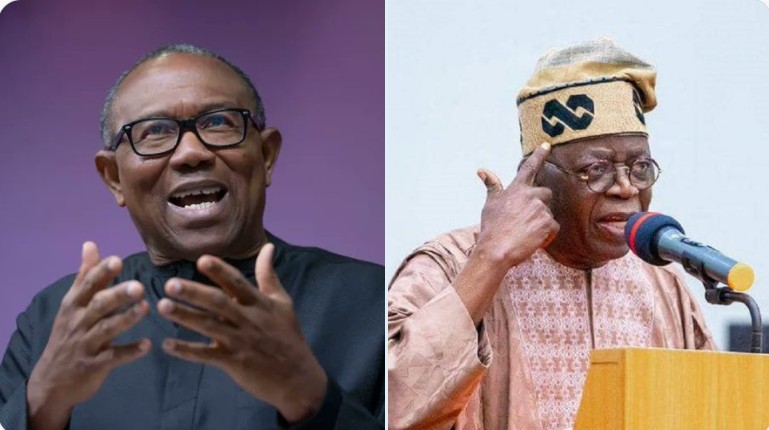
Former Anambra State Governor and presidential candidate of the Nigeria Democratic Congress, Peter Obi, has accused the administration of President Bola Ahmed Tinubu of pursuing what he described as excessive borrowing without sufficient transparency or accountability.
In a statement released on Monday, Obi expressed concern over Nigeria’s growing public debt profile, arguing that the pace of borrowing under the current administration raises serious questions about fiscal sustainability and the management of public resources.
According to Obi, Nigeria’s total debt has risen sharply in recent years, and he questioned whether the level of borrowing is being matched by corresponding investments in productive sectors of the economy. He cited budgetary figures which, he argued, show a significant gap between borrowed funds and actual capital expenditure.
The former governor specifically referenced borrowing data for the first three quarters of 2025, alleging that government borrowing exceeded planned targets while only a portion of the funds was reflected in capital project spending. He argued that Nigerians deserve a clear explanation regarding the utilization of the remaining funds.
Obi maintained that responsible fiscal management requires transparency in government spending, especially when borrowing levels are increasing amid economic hardship, inflationary pressures, and concerns about debt servicing obligations.
He further questioned whether borrowed resources were being effectively deployed toward infrastructure, education, healthcare, industrial development, and other sectors capable of generating long-term economic growth.
The criticism adds to ongoing debates about Nigeria’s fiscal policy under the Tinubu administration. Government officials have consistently defended their economic reforms and borrowing decisions, arguing that inherited structural challenges, infrastructure deficits, and revenue constraints require significant financing to support development objectives.
Supporters of the administration point to ongoing investments in transportation, energy, social programs, and public infrastructure as evidence that borrowed funds are being utilized to address long-standing national challenges. They also argue that debt should be evaluated relative to economic growth, revenue generation, and the productive value of funded projects rather than by nominal figures alone.
Economic analysts remain divided on the issue. While many acknowledge the necessity of borrowing for development, they generally stress the importance of ensuring that debt is sustainable, transparently managed, and directed toward projects capable of generating economic returns.
The debate comes as Nigerians continue to grapple with inflation, currency pressures, rising living costs, and concerns about the country’s fiscal outlook.
Obi concluded his remarks by reiterating his call for greater accountability in public finance management, arguing that prudent economic stewardship remains essential to achieving sustainable development and improving citizens’ welfare.
The exchange reflects the broader political and economic contest likely to intensify as parties and candidates position themselves ahead of the 2027 general elections.


