

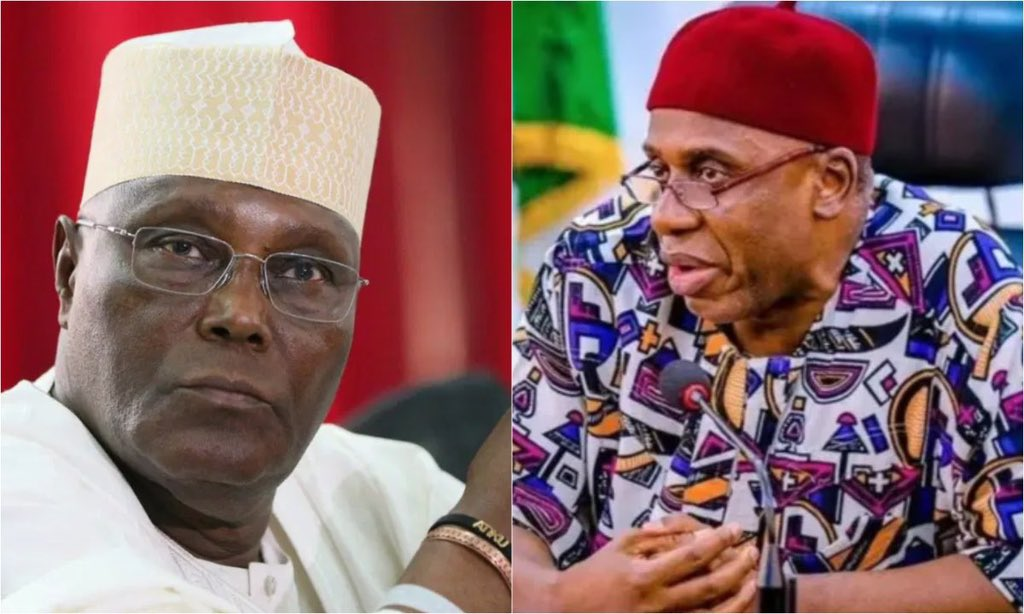
Following reports of widespread voter disenfranchisement in most parts of the country during the African Democratic Congress (ADC) Presidential Primaries yesterday, Amaechi unequivocally rejects the concocted results being announced.
He noted “I had initially stated that I will only accept the outcome of the Primaries if the process was free, fair, and transparent, and I stand by my word. I will not accept results from a process that does not reflect the values that the ADC had pledged to uphold, to rescue Nigerians from the impunity and gross mismanagement that our country is currently facing in the hands of the ruling party.”
He further noted that “There’s no way that about eighty percent of members of the party were not allowed to vote, and you expect me to accept such results. Then what makes us different from the others? The whole idea of the ADC was to give the Nigerian people a platform, to amplify the voices of the downtrodden, and make Nigeria a better place for everyone irrespective of backgrounds, ethnicity, or religion.”
He asserted that “A party that criticizes the ruling APC and INEC for vote buying, rigging and writing of results, cannot be engaged in vote buying, writing of results, and other electoral malpractices that leads to the disenfranchisement of voters who are party members. This is not acceptable!”
ADC Crisis: Why Peter Obi’s Exit Is Being Linked to Fears of Delegate Politics and Old Political Structures
The growing controversy surrounding the presidential primaries of the has intensified political debate over the earlier exit of from coalition discussions within the party.
Following the rejection of the ADC primary results by former Rivers State Governor, , over allegations of widespread disenfranchisement and electoral irregularities, many political observers and Obi supporters now argue that the former Labour Party presidential candidate may have foreseen the internal crisis long before it exploded publicly.
Analysts within opposition circles claimed Obi became increasingly uncomfortable with the alleged dominance of old political structures and money-driven delegate politics that reportedly began shaping the ADC coalition process ahead of the presidential primaries.
Although no court has established claims of vote buying, critics of the process alleged that powerful political interests heavily influenced delegate alignments and internal negotiations, raising concerns about transparency and fairness within the opposition movement.
Several Obi loyalists argued that the former Anambra governor’s political brand has consistently been built around accountability, prudence, and issue-based politics, making it difficult for him to fully align with a system perceived by supporters as being controlled by entrenched political heavyweights.
Supporters also pointed to the long-standing perception surrounding and Nigeria’s traditional delegate system, where wealthy political actors are often accused by opponents of wielding enormous financial influence during party primaries. However, such allegations remain politically contested and have not resulted in criminal convictions against Atiku.
According to insiders, Obi allegedly feared that participating in a heavily monetized delegate contest could damage the credibility he built among Nigerian youths and reform-minded voters during the 2023 elections.
Political commentators further argued that Obi’s eventual movement toward the was a strategic calculation aimed at preserving his reformist image and avoiding association with internal battles that later consumed the ADC.
The post-primary crisis within the ADC has now reinforced concerns among many Nigerians that opposition parties continue to struggle with internal democracy, despite repeatedly criticizing the ruling over similar issues.
Observers warn that unless opposition parties address accusations of delegate manipulation, elite control, and monetized politics, building a credible alternative capable of challenging the ruling establishment in 2027 may remain difficult.


