

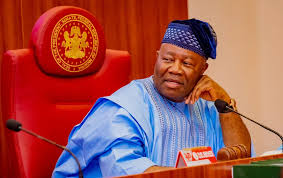
Senate President Godswill Akpabio has expressed confidence that Nigeria will overcome insurgency and other security challenges, citing the nation’s resilience through political crises, economic difficulties, and pandemics.
President of the Senate, Godswill Akpabio, has expressed optimism about Nigeria’s ability to overcome ongoing insurgencies and security challenges, stating that the country possesses the resilience needed to survive current difficulties just as it has endured previous political upheavals, economic crises, and global pandemics.
Akpabio made the remarks while addressing concerns over the security situation in parts of the country, emphasizing that despite the challenges posed by insurgency, banditry, kidnapping, and other threats, Nigeria remains capable of emerging stronger through collective effort and national unity.
The Senate President noted that the country’s history is filled with examples of resilience in the face of adversity. According to him, Nigerians have repeatedly demonstrated the ability to withstand difficult periods and rebuild from crises that once appeared overwhelming.
He pointed to various historical events, including political instability, economic downturns, health emergencies, and social tensions, as examples of challenges the nation successfully navigated through determination and cooperation.
“Nigeria will survive insurgencies the same way it survived past political upheavals and pandemics,” Akpabio reportedly stated.
His comments come at a time when security remains one of the most pressing issues facing the country. Several regions continue to grapple with varying forms of violence, including terrorist attacks, armed banditry, communal conflicts, and abductions.
Over the years, security agencies have intensified operations against insurgent groups and criminal networks operating across different parts of the country. While authorities have recorded successes in dismantling some criminal camps and rescuing abducted victims, concerns persist over recurring attacks and threats to communities.
Akpabio acknowledged the sacrifices being made by members of the armed forces, police, and other security agencies in their efforts to protect lives and property. He commended security personnel for their commitment and bravery, describing them as critical to maintaining national stability.
The Senate President also stressed the importance of public support in the fight against insecurity. According to him, effective security requires collaboration between government institutions, law enforcement agencies, community leaders, and ordinary citizens.
He urged Nigerians not to lose hope despite current difficulties, insisting that national challenges should not define the country’s future.
Political observers note that Akpabio’s statement reflects a broader effort by government officials to reassure citizens amid growing concerns about security and economic conditions. Many leaders have continued to emphasize resilience and national unity as key factors in overcoming ongoing challenges.
The comments have generated mixed reactions among Nigerians. Supporters of the Senate President argue that his remarks are intended to inspire confidence and remind citizens of the country’s ability to endure difficult periods.
Others, however, maintain that while optimism is important, authorities must also accelerate practical measures aimed at addressing insecurity and improving public safety.
Security analysts have repeatedly emphasized that defeating insurgency requires a combination of military action, intelligence gathering, economic development, and community engagement. Experts argue that long-term peace can only be achieved by addressing both the immediate security threats and the underlying factors that contribute to instability.
Nigeria has faced numerous national challenges since independence, including civil unrest, military rule, economic recessions, public health emergencies, and security crises. Despite these setbacks, the country has continued to function as Africa’s most populous nation and one of its largest economies.
The COVID-19 pandemic is often cited as one example of a major challenge that tested Nigeria’s resilience. Like many countries around the world, Nigeria faced significant health and economic disruptions during the outbreak but gradually adapted through policy interventions and public cooperation.
Similarly, the country has weathered political transitions and economic fluctuations that many observers believed could have caused lasting instability.
Akpabio’s latest comments suggest that he views the current security challenges through a similar lens, believing that Nigeria possesses the institutional strength and collective determination needed to overcome them.
As government authorities continue efforts to tackle insurgency and other security threats, many Nigerians will be looking for tangible improvements in safety, economic opportunities, and governance.
For now, the Senate President’s message centers on hope, resilience, and confidence in the nation’s ability to navigate another difficult chapter in its history while working toward a more secure and stable future.


