

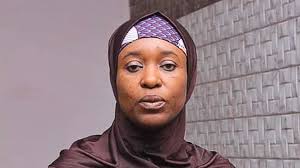
Prominent Nigerian activist Aisha Yesufu has criticized the leadership of the National Democratic Congress (NDC), suggesting that the party appears to be in political competition with former presidential candidate Peter Obi rather than focusing on its own internal unity and agenda.
Yesufu made the remarks while reacting to recent political developments within the NDC, where tensions have reportedly emerged over leadership direction, candidate selection, and the party’s broader strategy ahead of the 2027 general elections.
The outspoken activist argued that the NDC leadership, particularly its founding figures, should prioritize building a strong and coherent political platform instead of engaging in actions that could be interpreted as rivalry with established opposition figures.
Her comments come at a time when the NDC is attempting to consolidate its structure following rapid expansion since its formation. The party, which has attracted attention for bringing together high-profile political actors, has also faced internal disagreements over its leadership style and decision-making process.
Yesufu’s criticism focused on what she described as mixed messaging from the party, particularly regarding its relationships with prominent political figures such as Peter Obi, who remains one of Nigeria’s most influential opposition leaders following the 2023 general elections.
According to her, political parties should focus on strengthening their internal structures, building trust among members, and presenting clear ideological positions to the electorate rather than appearing to compete indirectly with individuals who already have established national followings.
The activist’s statement has sparked widespread reactions across social media, where supporters and critics of both Yesufu and the NDC have engaged in heated debates over the role of emerging political parties in Nigeria’s evolving democratic landscape.
The National Democratic Congress, led by former Bayelsa State governor Seriake Dickson, has positioned itself as a reform-driven political platform aiming to offer Nigerians an alternative to the country’s dominant political parties. Since its launch, the party has emphasized inclusiveness and coalition-building as part of its strategy ahead of the 2027 elections.
However, recent controversies surrounding candidate selection and internal coordination have raised questions about the party’s cohesion and long-term viability. Some observers believe that the NDC’s rapid growth has outpaced its institutional development, leading to misunderstandings and conflicting expectations among members.
Yesufu’s remarks add to the growing scrutiny of the party’s internal dynamics, particularly as it navigates alliances, public perception, and its role within Nigeria’s broader opposition landscape.
Peter Obi, although not directly involved in the dispute, continues to command significant political influence across the country. His strong performance in the 2023 presidential election and sustained public engagement have made him a central figure in discussions about opposition politics in Nigeria.
Political analysts note that any perceived competition between emerging parties like the NDC and established figures such as Obi could shape voter perception ahead of the next election cycle. They argue that unity within the opposition may be critical in challenging Nigeria’s dominant political blocs in 2027.
Meanwhile, supporters of the NDC have defended the party’s leadership, insisting that its decisions are guided by strategic considerations aimed at strengthening its national presence rather than targeting individual politicians.
They argue that coalition-building and political engagement with various stakeholders are standard practices in democratic politics and should not be misinterpreted as personal rivalry.
As the political landscape continues to evolve ahead of the 2027 elections, tensions between activists, party leaders, and political figures are expected to remain in the spotlight. The debate over opposition unity, party identity, and leadership direction is likely to intensify as parties begin to position themselves for national contests.
For now, Aisha Yesufu’s comments have added another layer to Nigeria’s already dynamic political discourse, highlighting the challenges faced by emerging parties in balancing ambition, structure, and public perception.


