

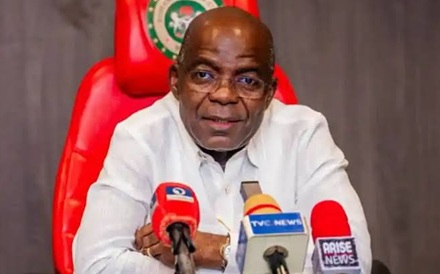
The Abia State Government has introduced new billboard permit charges for political campaigns ahead of the 2027 general elections, setting a one-time fee of ₦200 million for presidential candidates seeking to advertise across the state.
The new rates, announced by the state’s signage and advertising agency, also prescribe ₦150 million for governorship candidates, with lower fees for other elective offices, including ₦20 million for candidates contesting seats in the State House of Assembly.
According to state officials, the charges are based on existing state laws regulating outdoor advertising and are intended to promote orderliness, protect public infrastructure, ensure equitable access to advertising spaces and generate revenue for the state.
The government maintained that political campaigns, like commercial advertising, must comply with regulatory requirements governing the use of public spaces and billboards.
Officials further argued that the permit system would help prevent indiscriminate placement of campaign materials while ensuring that outdoor advertising remains properly managed throughout the election period.
However, the announcement has generated widespread criticism from political parties, candidates and stakeholders within the advertising industry.
Presidential candidate of the African Action Congress (AAC), Omoyele Sowore, described the fees as an attempt to discourage political participation, arguing that the policy could disproportionately affect opposition parties with limited financial resources.
Industry groups also expressed concern over the scale of the charges, describing them as significantly higher than those imposed in several other states.
Some advertising practitioners pointed to neighbouring Anambra State, where presidential campaign billboard permits reportedly cost ₦50 million, arguing that the Abia rates could discourage legitimate political advertising and reduce opportunities for voter engagement.
Critics contend that campaign billboards remain an important channel for communicating candidates’ manifestos, introducing contestants to voters and promoting issue-based campaigns, particularly in areas with limited access to digital media.
One governorship aspirant reportedly protested the policy by announcing that he would conduct his campaign without using billboards, describing the fees as excessive and inconsistent with efforts to deepen democratic participation.
Political analysts note that while state governments possess legal authority to regulate outdoor advertising within their jurisdictions, such regulations must balance revenue generation with the constitutional principles of political participation, equality and freedom of expression.
They argue that excessively high campaign advertising fees could place smaller political parties and independent candidates at a competitive disadvantage, potentially limiting electoral competition.
Supporters of the policy, however, insist that all candidates are subject to the same rules and that the regulations are designed to ensure transparency, proper urban planning and responsible use of public spaces.
As preparations for the 2027 elections continue, stakeholders are expected to engage further with the Abia State Government over the implementation of the new policy, with many calling for broader consultations to ensure that campaign regulations promote both orderly elections and a level playing field for all contestants.


