

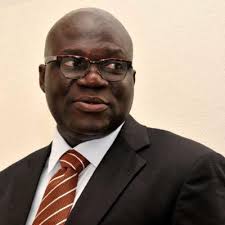
Political analyst and former presidential spokesman Reuben Abati has commended President Bola Ahmed Tinubu’s political influence and strategic brilliance, suggesting that the Nigerian leader should establish a school focused on politics and leadership strategy.
Abati made the statement while discussing recent developments within the All Progressives Congress (APC), particularly the outcome of internal party primaries and the president’s continued control of political structures within the ruling party.
During a televised political programme, Abati described Tinubu as one of the most strategic politicians in Nigeria’s democratic history, noting that his ability to build alliances and maintain long-term political influence sets him apart from many of his contemporaries.
According to Abati, Tinubu’s political methods and organizational skills could serve as valuable lessons for aspiring politicians and future leaders.
“Tinubu understands the game better than most people,” Abati said. “At this point, he should probably start a school of politics and strategy because there is a lot people can learn from his style of leadership and political coordination.”
The remarks quickly attracted reactions from political supporters, critics, and commentators across the country, with many debating the implications of Tinubu’s growing influence within the APC and Nigeria’s broader political environment.
The comments came amid increasing discussions surrounding the APC’s internal political structure following recent party primaries and appointments that reinforced the president’s influence over the ruling party.
Observers say Tinubu has remained a dominant force within the APC since its formation, playing a major role in coalition-building, electoral planning, and political negotiations that have shaped the party’s direction over the years.
Tinubu, who previously served as governor of Lagos State, is widely regarded as one of the architects of modern coalition politics in Nigeria. His influence became especially visible during the merger of opposition parties that led to the creation of the APC in 2013.
The alliance eventually ended the Peoples Democratic Party’s long-standing hold on power after the APC won the 2015 presidential election.
Analysts believe Tinubu’s political strength lies in his ability to identify loyal allies, maintain extensive grassroots networks, and strategically position himself within Nigeria’s complex political landscape.
Supporters of the president argue that his achievements are the result of years of planning, relationship-building, and disciplined political organization.
“Tinubu’s political structure did not emerge overnight,” an Abuja-based political commentator said. “It is the product of decades of careful planning and strategic engagement.”
However, critics have expressed concerns about the concentration of power around influential political figures, warning that excessive dominance by individuals could weaken democratic institutions and reduce internal party competition.
Opposition figures also argue that political parties should prioritize transparent systems and institutional processes over loyalty to powerful personalities.
Despite the criticism, many political analysts agree that Tinubu remains one of the most influential political figures in Nigeria today.
The APC primaries and recent political developments have once again highlighted the president’s strong grip on party affairs, with many aspirants and party stakeholders continuing to align themselves with his political camp.
Abati’s comments have also reopened conversations about political education and leadership development in Nigeria.
Some commentators believe the country needs formal institutions dedicated to teaching governance, negotiation, strategy, and public leadership, especially as younger politicians prepare to enter national politics.
Others argued that experienced political figures could contribute significantly to leadership training by sharing practical knowledge gathered over decades of political involvement.
Meanwhile, reactions on social media remain divided. While supporters praised Abati for recognizing Tinubu’s political accomplishments, critics questioned whether describing one politician as the “owner of the game” reflects healthy democratic values.
Some users interpreted the statement as a compliment to Tinubu’s strategic abilities, while others saw it as evidence of the growing personalization of Nigerian politics.
Political analysts say the debate reflects a broader reality within Nigeria’s political culture, where influential personalities often play central roles in shaping party structures, alliances, and electoral outcomes.
As political activities gradually intensify ahead of future elections, Tinubu’s leadership style and influence within the APC are expected to remain major topics of national discussion.
For now, Abati’s remarks have further fueled conversations about political strategy, leadership, and the evolving nature of power within Nigeria’s democratic system.


