

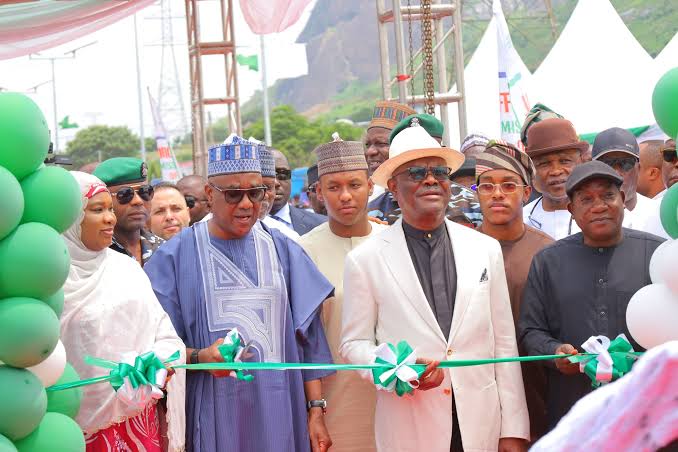
Minister of the Federal Capital Territory (FCT), Nyesom Wike, has credited President Bola Tinubu’s infrastructure projects in Abuja with changing public perception of the administration, claiming the scale of ongoing development has left critics with little room to question the government’s performance.
Speaking during the inauguration of completed projects in the nation’s capital, Wike said the Tinubu administration’s commitment to delivering critical infrastructure had produced visible results across the Federal Capital Territory. According to the minister, the pace of development demonstrates the government’s determination to improve transportation, urban renewal, and public services.
Wike argued that the completion of key road networks, bridges, and other public facilities has strengthened confidence in the administration’s agenda. He maintained that the projects speak for themselves and have become the administration’s strongest response to opposition criticism.
“The projects Mr. President has delivered in Abuja have silenced the opposition because the results are visible for everyone to see,” Wike said during the event.
The minister praised Tinubu for prioritizing capital projects despite prevailing economic challenges, noting that the renewed investment in infrastructure is intended to enhance mobility, stimulate economic activity, and improve the quality of life for residents of the Federal Capital Territory.
The inauguration formed part of a series of projects executed under the FCT Administration, including road construction, rehabilitation of existing infrastructure, and urban development initiatives designed to ease traffic congestion and support the city’s growing population.
Wike’s remarks have generated mixed political reactions. Supporters of the administration described the completed projects as evidence of effective governance and a commitment to fulfilling campaign promises. Opposition figures, however, have maintained that government performance should also be assessed on broader economic indicators, including inflation, unemployment, and the cost of living.
Political analysts say infrastructure development remains a significant measure of government performance, particularly in the Federal Capital Territory, where projects are highly visible and directly affect residents and businesses.
As the Tinubu administration continues implementing its development agenda, the government has pledged to sustain investment in critical infrastructure nationwide. Observers say the long-term impact of these projects will ultimately be measured by their contribution to economic growth, improved public services, and the overall welfare of Nigerians.


