

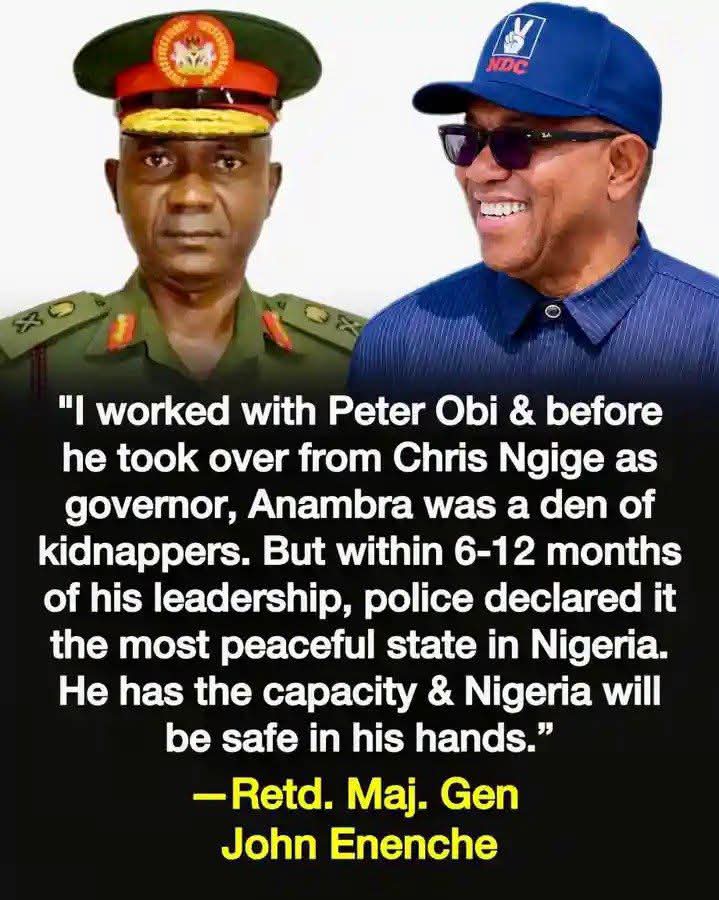
As Nigerians begin to assess potential candidates ahead of the 2027 elections, one issue that will remain central to voter decision making is security. Across the country, concerns about violent crime, insurgency, kidnapping, communal conflicts, and threats to public safety continue to shape public discourse. As a result, citizens are increasingly interested in leaders who can point to a proven record of addressing insecurity rather than relying solely on campaign promises. In an environment where security challenges directly affect livelihoods, economic activity, and social stability, voters are likely to place significant value on candidates who have demonstrated practical leadership in difficult circumstances.
Peter Obi’s tenure as governor of Anambra State continues to attract attention because of the security improvements recorded during that period. His administration is frequently referenced in discussions about governance and public safety because several senior security officials who served in the state have publicly spoken about the role his government played in supporting efforts to restore law and order. These accounts have contributed to ongoing debates about leadership effectiveness and the importance of collaboration between elected officials and security institutions.
Retired Major General John Enenche recalled how insecurity in Onitsha and other parts of Anambra was significantly reduced through coordinated security operations backed by the state government. According to him, the collaboration between security agencies and the government contributed to improved safety across the state. Such cooperation is often regarded as a critical factor in successful security management, as it enables intelligence sharing, operational coordination, and the provision of resources necessary for effective law enforcement and crime prevention.
Former Inspector-General of Police Mohammed Abubakar also acknowledged Peter Obi’s commitment to security, describing him as a governor who consistently demonstrated concern for the protection of lives and property in Anambra State. His remarks have been cited by supporters as evidence of a leadership style that prioritized public welfare and recognized the importance of maintaining a secure environment for residents and businesses alike.
Similarly, retired Deputy Inspector-General of Police Philemon Leha credited Obi with helping to establish the foundation for the security gains that Anambra later experienced. His observations suggest that long-term improvements in security often result from deliberate policies, institutional support, and sustained engagement with relevant stakeholders rather than isolated interventions.
These testimonies do not suggest that every security challenge disappeared during Obi’s administration, nor do they imply perfection. Security management is inherently complex, and no government is entirely free from challenges. However, the statements provide documented accounts from senior security officers who were directly involved in maintaining security during that period. Their perspectives offer insight into how security strategies were implemented and how government support may have influenced outcomes on the ground.
For many voters, such records matter because they offer measurable evidence of leadership under real-world conditions. Political campaigns often feature ambitious promises, but past performance can provide a more reliable basis for evaluating a candidate’s capabilities. When citizens assess potential leaders, they frequently consider whether those individuals have previously demonstrated the ability to manage crises, coordinate institutions, and deliver tangible results.
As the country looks toward 2027, Peter Obi’s Anambra security turnaround remains a critical asset that voters may consider when evaluating who possesses the experience and capacity to address Nigeria’s persistent security challenges. Whether viewed as a model of effective governance or as one factor among many in a broader political assessment, the security record associated with his administration continues to be part of the national conversation.
Ultimately, Nigerians have the right to support any candidate of their choice. However, informed democratic decisions are best made by carefully examining verifiable records, competence, and demonstrated performance in office. By considering documented achievements alongside policy proposals and future plans, voters can make choices that reflect both their aspirations and their assessment of each candidate’s ability to govern effectively.


