

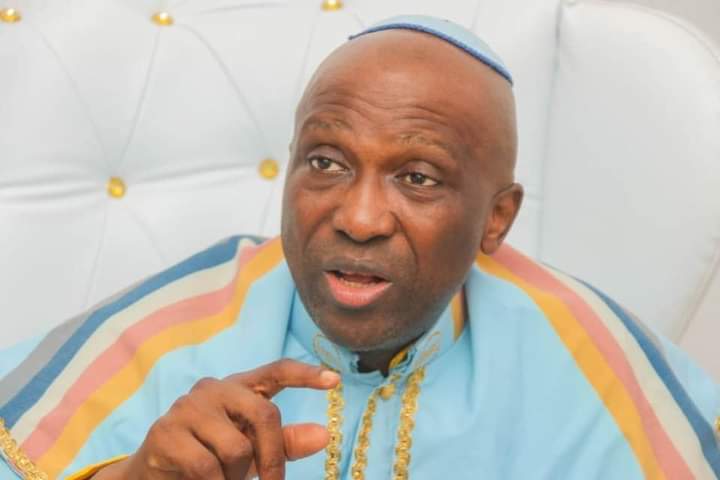
The Leader of the INRI Evangelical Spiritual Church, Primate Elijah Ayodele, has expressed doubts about the political future of the National Democratic Coalition (NDC), describing the platform as a political venture that may struggle to achieve meaningful success ahead of the 2027 general elections.
Ayodele’s comments have sparked fresh debate within political circles as discussions surrounding alliances, coalition movements, and emerging political platforms continue to intensify ahead of Nigeria’s next presidential election cycle.
According to the cleric, political actors and supporters who view the NDC as a major vehicle for future electoral victories may need to reassess their expectations. He argued that the coalition faces significant structural and strategic challenges that could limit its ability to become a dominant force in national politics.
Primate Ayodele Raises Concerns About NDC’s Prospects
Speaking on the evolving political landscape, Ayodele reportedly stated that the NDC lacks the foundation required to compete effectively against established political parties in future elections.
He described the coalition as a political arrangement that could create unrealistic expectations among supporters if critical organizational issues are not addressed early.
According to him, successful political movements require more than public enthusiasm and media attention. They must also possess strong leadership structures, grassroots networks, financial capacity, and a clear ideological direction.
Ayodele maintained that without these essential elements, political coalitions often struggle to translate public goodwill into electoral victories.
Growing Political Realignments Ahead of 2027
Nigeria’s political environment has witnessed increasing discussions about coalition-building and opposition unity following the 2023 general elections.
Several political groups and stakeholders have explored various strategies aimed at strengthening their influence ahead of the next electoral cycle. These conversations have fueled speculation about possible mergers, alliances, and new political movements designed to challenge established parties.
Political analysts believe coalition politics will play a significant role in shaping the 2027 elections, especially as opposition leaders seek ways to consolidate support and improve their chances at the polls.
However, Ayodele cautioned that forming a coalition alone does not guarantee success, noting that many political alliances in the past failed due to internal disagreements, leadership struggles, and conflicting interests.
Importance of Strong Political Structures
The cleric emphasized that enduring political success is often built on robust organizational systems rather than temporary alliances.
According to him, voters increasingly expect political parties and coalitions to present clear policy alternatives and demonstrate the capacity to govern effectively.
He argued that any platform hoping to influence the outcome of the 2027 elections must focus on building credibility, strengthening grassroots engagement, and developing practical solutions to Nigeria’s economic and social challenges.
Observers say these factors have become increasingly important as citizens demand greater accountability and performance from political leaders.
Mixed Reactions From Political Observers
Ayodele’s comments have generated varied reactions among political stakeholders.
Supporters of coalition politics argue that emerging alliances remain capable of transforming Nigeria’s political landscape if they successfully unite diverse interests under a common vision.
Others share the cleric’s concerns, noting that political coalitions often encounter difficulties when member groups prioritize individual ambitions over collective goals.
Some analysts believe the success or failure of any coalition movement will ultimately depend on its ability to maintain unity, attract grassroots support, and offer a compelling alternative to existing political structures.
The Road to 2027
With the next general elections still some years away, political parties and interest groups are expected to intensify consultations, negotiations, and strategic planning.
The period leading up to 2027 is likely to witness significant political realignments as leaders position themselves for future contests and seek to build broader support bases across the country.
Ayodele’s remarks add another perspective to the ongoing debate about the viability of new political movements and coalition platforms.
While supporters of the NDC remain optimistic about its potential role in shaping Nigeria’s future, critics argue that the coalition must overcome substantial challenges before it can emerge as a formidable political force.
Political Forecast Sparks National Discussion
As conversations about the 2027 elections continue to gain momentum, Ayodele’s prediction has drawn attention to the complexities of coalition politics in Nigeria.
Whether the NDC eventually proves its critics wrong or struggles to meet expectations remains to be seen. However, the cleric’s warning has reinforced the broader message that political success requires strategic planning, unity, and strong organizational foundations.
With political maneuvering already underway, the future of emerging coalitions is expected to remain a key topic in Nigeria’s evolving electoral landscape.


