

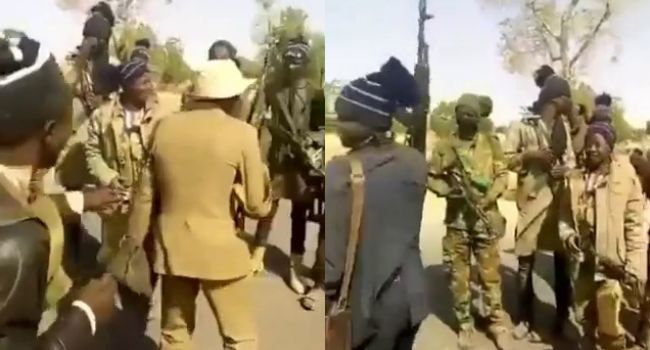
A viral video circulating widely on social media has ignited fresh controversy over Nigeria’s prolonged battle with banditry, after a captured suspect alleged that armed groups operate under the influence of a senior military officer.
The 90-second clip, reportedly recorded somewhere in northern Nigeria, shows a man bound by his ankles in a rural setting, surrounded by individuals believed to be security personnel. Speaking in a mix of Hausa and Pidgin English, the suspect claims that his group answers to a high-ranking figure he identified only by the nickname “Manga Manga,” described as a “big soldier” whose family resides in Abuja.
In the footage, the man pleads to be untied, promising to disclose the locations of weapons caches and provide further details about the alleged network. The interrogation, which appears informal and not part of any officially documented operation, has raised concerns about both the credibility of the claims and the conditions under which the statements were made.
As of the time of filing this report, the Nigerian Army has not issued an official response to the video or the allegations contained within it. The absence of confirmation has left room for speculation, with security experts and members of the public urging caution in interpreting the claims.
The video has nonetheless fueled long-standing suspicions among sections of the population regarding possible collusion between rogue elements within the security forces and criminal groups. For years, communities in states such as Zamfara State and Katsina State have endured persistent attacks by bandits, including mass kidnappings, cattle rustling, and village raids.
While the Nigerian government has consistently denied any institutional link between the military and bandit groups, isolated allegations of insider complicity have periodically surfaced, often without conclusive evidence. Analysts warn that unverified claims—especially those disseminated through social media—can deepen mistrust and complicate ongoing security efforts.
“This kind of footage must be treated with extreme caution,” a security analyst noted. “Confessions obtained under duress or unclear circumstances may not reflect the full truth, and amplifying them without verification can undermine both morale and public confidence.”
Human rights observers have also raised concerns about the manner in which the suspect was handled in the video, pointing to the need for adherence to due process and proper investigative procedures. They argue that credible investigations, rather than public interrogations, are essential for establishing facts and ensuring accountability.
Despite these cautions, the video has struck a nerve in a country where insecurity remains one of the most pressing national challenges. Citizens have taken to online platforms to express frustration, with many calling for transparency and independent inquiries into any allegations of complicity within the security apparatus.
The Nigerian military, widely regarded as a key pillar in the fight against insurgency and banditry, faces the delicate task of maintaining public trust while confronting increasingly complex threats. Any perception of internal compromise, analysts warn, could weaken the broader counterinsurgency effort.
As investigations—formal or informal—continue, the authenticity and implications of the viral video remain uncertain. What is clear, however, is that the allegations have reignited a critical debate about accountability, transparency, and the urgent need to end the cycle of violence affecting communities across northern Nigeria.


