

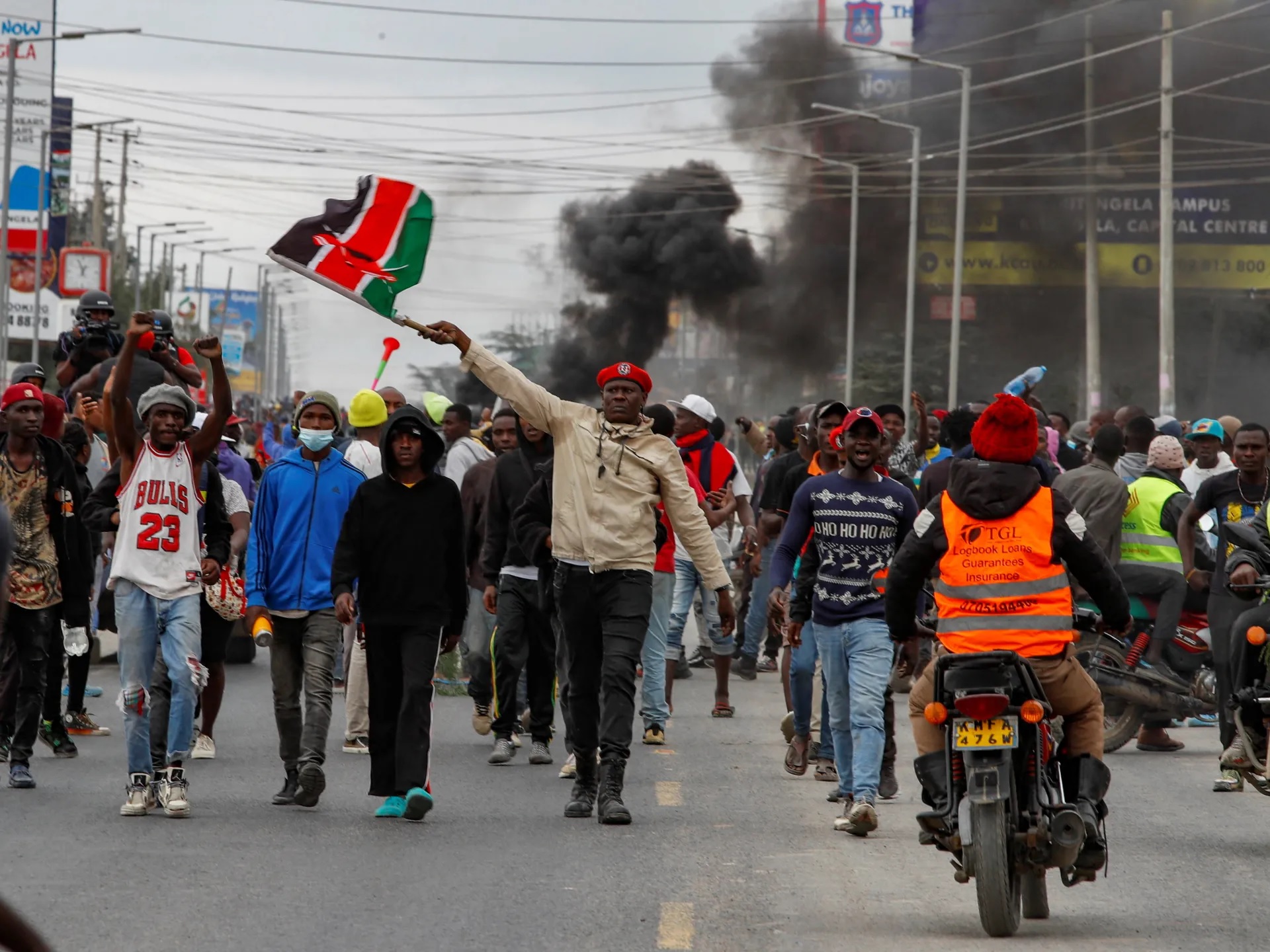
A wave of frustration swept through Kenya’s capital as young protesters braved heavy rain and a strong police presence to demonstrate against rising fuel prices, highlighting growing economic pressure on ordinary citizens.
The protests, which took place in Nairobi, were sparked by a recent announcement from the Energy and Petroleum Regulatory Authority (EPRA), which increased the price of super petrol to KSh 206.97 per litre and diesel to KSh 206.84. Authorities attributed the hike to global oil price surges driven by tensions in the Middle East, as well as a reported 68 percent increase in import costs.
Despite adverse weather conditions, groups of mostly young demonstrators gathered near the Kenya National Archives under the banner of the social media campaign #RejectFuelPrices. Protesters chanted slogans and carried placards demanding immediate government action to ease the burden of high living costs.
However, the demonstration was quickly met with resistance from anti-riot police, who moved to disperse the crowd. Witnesses reported scenes of tension as officers attempted to break up the gathering, leading to the arrest of at least 11 individuals. Among those detained were activists Joshua Okoyo and Collins Oteno, whose subsequent court appearance drew supporters who sang in solidarity outside the courthouse.
The protests come amid a broader cost-of-living crisis affecting many Kenyan households, where rising fuel prices have a ripple effect on transportation, food costs, and overall economic stability. For many young people, the increase represents yet another strain in an already challenging economic environment marked by unemployment and inflation.
In response to public outcry, the Kenyan government has introduced measures aimed at cushioning the impact. These include a reduction in Value Added Tax (VAT) on fuel to 8 percent and the allocation of KSh 6.2 billion in subsidies and relief efforts. Officials argue that these interventions are necessary to balance fiscal responsibility with social welfare, especially given the global factors influencing fuel prices.
President William Ruto has called for calm and dialogue, urging citizens to engage constructively rather than resorting to disruptive protests. “We understand the concerns of our people,” he said in a recent statement, “but solutions must come through cooperation and sustained engagement.”
Despite the government’s appeal, critics argue that the measures fall short of addressing the root causes of economic hardship. Some analysts suggest that the relatively low turnout at the protests—partly due to the heavy rain and what they describe as “protest fatigue” following previous demonstrations—does not necessarily reflect a lack of public dissatisfaction.
Observers note that the situation in Nairobi mirrors a broader trend across many developing economies, where global market fluctuations are increasingly felt at the local level. As fuel prices continue to rise, the pressure on governments to balance economic realities with public expectations is intensifying.
For now, the protests in Nairobi serve as a visible expression of public frustration, even as the path forward remains uncertain. Whether through policy adjustments or continued civic engagement, the demand for relief is unlikely to fade anytime soon, as citizens seek solutions to the mounting cost-of-living crisis.


