

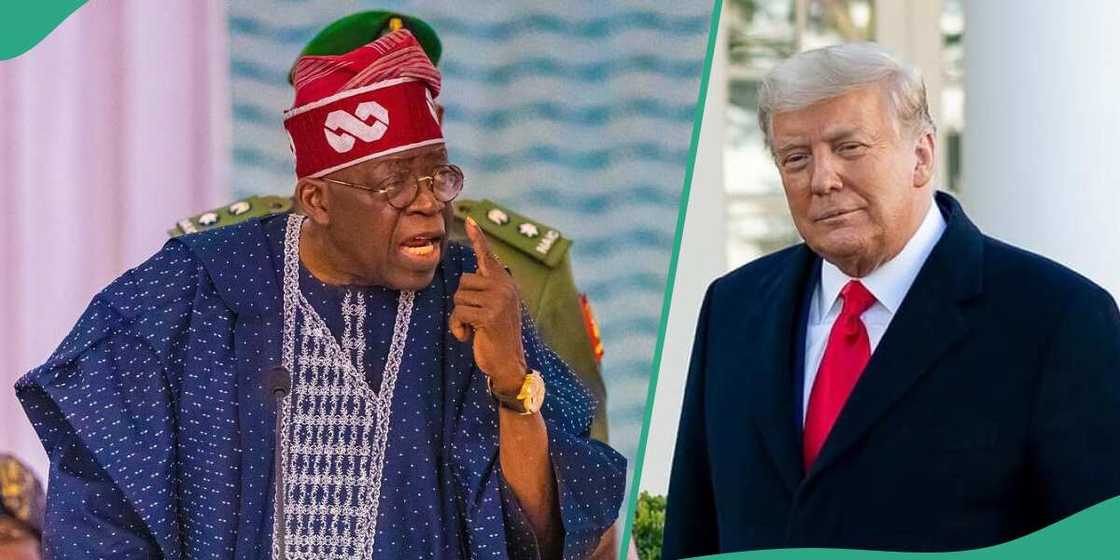
The reported commendation by United States President Donald Trump praising President Bola Ahmed Tinubu’s administration for its fight against terrorism has sparked debate over whether Washington has an accurate assessment of Nigeria’s security realities.
For many observers, such commendation appears difficult to reconcile with the persistent insecurity affecting large parts of the country. Across the Northeast, the Middle Belt, and parts of the Northwest, terrorist attacks, mass kidnappings, and violent assaults on rural communities continue to claim lives and displace thousands of families.
Critics argue that the praise raises important questions: What intelligence or assessment informed the U.S. President’s commendation? Was the recommendation based on objective security data, diplomatic briefings, or broader geopolitical considerations?
Despite government claims of progress, hundreds of schoolchildren, women, farmers, and travelers continue to fall victim to kidnappings for ransom. Entire communities have reportedly been deserted as residents flee repeated attacks by terrorist groups and armed bandits. In several parts of the country, communities remain inaccessible as insecurity has disrupted farming, education, healthcare, and economic activities.
The humanitarian impact has been profound. Millions of Nigerians have been displaced internally over the years by insurgency, banditry, and communal violence. Many rural communities remain under constant threat, with residents depending on internally displaced persons (IDP) camps or relocating to safer urban centres.
Against this backdrop, critics contend that President Trump’s commendation creates the impression that the United States either lacks a complete appreciation of the security challenges confronting ordinary Nigerians or has chosen to prioritize broader strategic, diplomatic, or economic interests over the day-to-day realities faced by citizens. Some commentators have questioned whether geopolitical considerations—including security cooperation, regional stability, or access to Nigeria’s economic resources—may have influenced the tone of the commendation.
Others, however, argue that international leaders often commend partner governments for perceived progress or cooperation while still recognizing that significant security challenges remain. Diplomatic statements do not necessarily imply that a conflict has been fully resolved.
The divergence between official optimism and conditions experienced by many affected communities underscores the complexity of Nigeria’s security landscape. While security agencies have reported successes against insurgent groups in some operations, recurring attacks, mass abductions, and the displacement of civilian populations continue to fuel concerns about the effectiveness of current counterterrorism efforts.
For many Nigerians living in conflict-affected regions, the ultimate measure of success is not diplomatic commendation but the restoration of safety, the return of displaced communities to their ancestral homes, and an end to the cycle of terrorism, banditry, and violent attacks that has persisted for more than a decade.Trump’s Commendation Letter Raises Questions Ahead of Tinubu’s Planned U.S. Visit
President Donald Trump’s reported commendation of President Bola Tinubu’s counterterrorism efforts has generated debate about the timing and implications of the message, particularly as Tinubu is expected to embark on a state visit to Washington in the coming days.
From a critical perspective, the commendation appears at odds with the security realities confronting many Nigerians. Critics argue that prioritizing diplomatic praise over an honest assessment of terrorism risks weakening the global fight against violent extremism. They contend that insecurity anywhere ultimately threatens security everywhere, making objective intelligence and realistic security assessments indispensable.
The timing of the commendation has also prompted speculation among some political observers, who question whether it could be linked to broader diplomatic, economic, or strategic engagements expected during the visit. However, no public evidence has been presented to establish that the commendation was issued to facilitate any particular agreement or negotiation.
Given these circumstances, civil society organisations, policy analysts, and the media have a responsibility to closely monitor the outcomes of high-level engagements between Washington and Abuja. They should scrutinize any agreements reached to ensure they advance Nigeria’s national interest, strengthen security, and promote transparency, especially as the country prepares for the 2027 general elections.
For many Nigerians, the overriding expectation remains that international partnerships should be measured not by diplomatic commendations, but by tangible improvements in the protection of lives, the defeat of terrorism, and the restoration of peace to communities devastated by years of violence.


