

President Bola Tinubu has highlighted ongoing efforts by the Federal Government to address Nigeria’s longstanding housing challenges, outlining a series of initiatives aimed at increasing home ownership, expanding affordable housing projects, and reducing the country’s estimated housing deficit.
The announcement comes as Nigeria continues to grapple with a shortage of nearly 15 million housing units, a challenge driven by rapid urbanization, population growth, rising construction costs, and limited access to affordable mortgage financing.
According to the President, the administration has developed a housing strategy designed to accelerate residential development across the country while making home ownership more accessible to Nigerians.
Government Targets 100,000 New Housing Units
As part of the plan, the Federal Government aims to deliver approximately 100,000 housing units nationwide, with an initial phase targeting 50,000 homes across various geopolitical zones and states.
Officials say the initiative forms part of a broader effort to address housing shortages in both urban and emerging communities while stimulating economic activity through construction and infrastructure development.
The government believes that increasing housing supply will help ease pressure on property markets and provide more opportunities for Nigerians seeking affordable accommodation.
Major Projects Underway in Abuja and Lagos
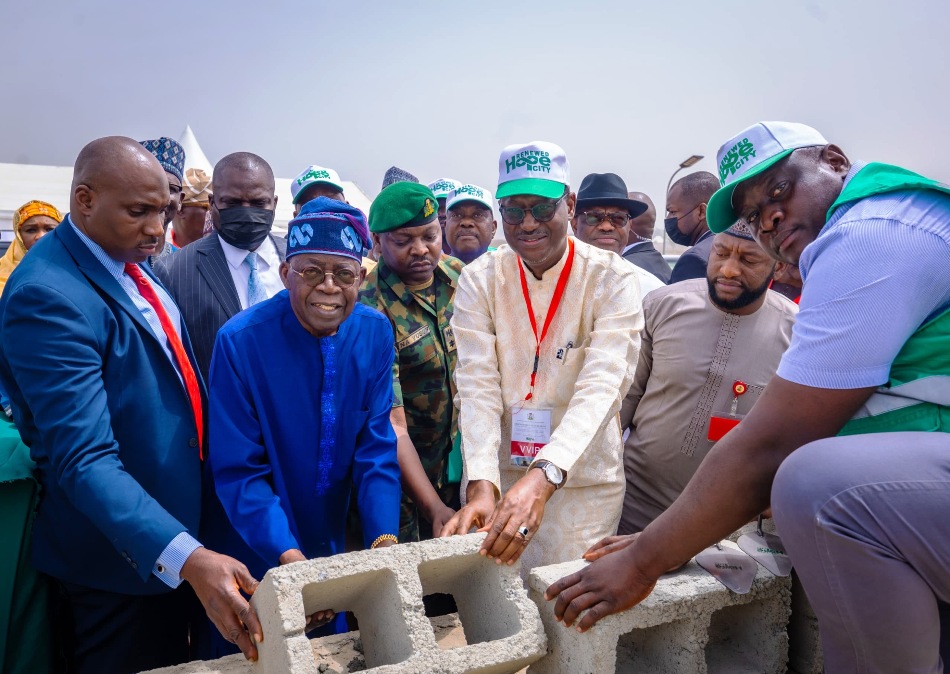
Among the flagship projects highlighted by the administration is a large-scale housing development in Karsana, Abuja, where more than 3,000 housing units have already reached the groundbreaking stage.
Authorities describe the project as one of the most ambitious residential developments currently underway in the Federal Capital Territory.
In Lagos, another major housing project involving approximately 2,000 units is progressing, with officials expressing confidence that it will contribute significantly to expanding housing availability in the country’s commercial capital.
Government representatives say these projects are expected to create employment opportunities while supporting local industries involved in construction, manufacturing, and infrastructure services.
Mortgage Financing Receives Boost
A central component of the administration’s housing strategy is improving access to mortgage financing.
According to government figures, about ₦128 billion has been provided through low-interest mortgage facilities to support home ownership for thousands of beneficiaries.
Officials report that more than 1,800 families have already benefited from these financing arrangements, enabling them to acquire homes under government-backed programs.
The administration argues that expanding mortgage access is essential to reducing barriers that have traditionally prevented many Nigerians from purchasing homes.
Land Reforms and Construction Support
The government is also pursuing reforms aimed at simplifying land ownership processes and reducing the cost of property acquisition.
Partnerships involving international development institutions are expected to support land titling initiatives designed to improve documentation and strengthen property rights.
In addition, efforts are being made to reduce construction costs through improved access to equipment, local production of building materials, and policies intended to encourage private-sector participation in housing development.
Officials believe these measures will help accelerate project delivery and improve affordability over time.
Affordability Debate Continues
Despite the progress reported by the government, questions remain about whether the new housing initiatives will be affordable for the average Nigerian worker.
Housing advocates and economic analysts argue that rising inflation, increasing rental costs, and income challenges continue to limit access to home ownership.
Some critics point out that mortgage repayment obligations may still be beyond the reach of many households, particularly those earning the national minimum wage.
They contend that while increasing housing supply is important, affordability must remain a central consideration if the housing deficit is to be meaningfully reduced.
Experts Call for Broader Housing Reforms
Urban development specialists say addressing Nigeria’s housing shortage will require a combination of increased construction, expanded financing options, improved infrastructure, and stronger support for low-income housing programs.
They also emphasize the need for collaboration between federal and state governments, private developers, financial institutions, and international partners.
According to experts, long-term success will depend not only on the number of homes built but also on their accessibility to ordinary Nigerians.
Looking Ahead
The Tinubu administration maintains that its housing initiatives represent a major step toward addressing one of Nigeria’s most pressing development challenges.
With several projects already underway and additional phases planned, officials remain optimistic about expanding access to housing and reducing the country’s deficit over the coming years.
As implementation continues, attention will remain focused on whether these efforts can successfully balance large-scale construction with affordability and accessibility for millions of Nigerians seeking decent and secure housing.


