

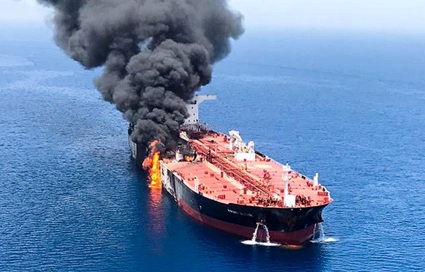
A commercial oil tanker sustained minor damage after being struck by a projectile near the Strait of Hormuz, further heightening concerns over maritime security in one of the world’s most strategic shipping corridors amid escalating military tensions in the Gulf.
The United Kingdom Maritime Trade Operations (UKMTO) confirmed that the incident occurred on Thursday approximately 19 nautical miles east of Khasab, Oman. According to the maritime security agency, the projectile struck the vessel’s port side, causing limited structural damage.
Despite the impact, all crew members aboard the tanker were reported safe, with no injuries recorded. Authorities also confirmed that there was no oil spill or environmental pollution resulting from the incident, allowing the vessel to continue its voyage to its scheduled destination.
The UKMTO said investigations are underway to determine the exact circumstances surrounding the attack and identify those responsible. Maritime authorities have urged vessels operating in the region to exercise heightened caution, maintain close communication with security agencies and immediately report any suspicious activity.
The latest incident comes against the backdrop of rapidly escalating hostilities between the United States and Iran. For six consecutive nights, U.S. forces have carried out air and naval strikes targeting Iranian military facilities, coastal defence systems and logistics hubs, with Washington saying the operations are intended to safeguard freedom of navigation and protect international shipping through the Strait of Hormuz.
Iran has responded with missile and drone attacks directed at U.S. military installations and allied facilities across the Gulf, further increasing fears that the confrontation could expand into a broader regional conflict.
Security analysts believe the attack on the tanker may be linked to the deteriorating security environment surrounding the Strait of Hormuz, although no group has claimed responsibility and investigators have not officially attributed the strike to any party.
The Strait of Hormuz is regarded as one of the world’s most critical maritime chokepoints, serving as the transit route for nearly 20 per cent of global oil trade. Any disruption to shipping in the narrow waterway has the potential to affect international energy markets, fuel prices and global supply chains.
The latest strike follows similar incidents involving commercial vessels off the coast of Oman earlier this month, prompting renewed concerns among shipping companies, insurers and international naval forces operating in the region.
Industry experts warn that repeated attacks on merchant vessels could lead to higher shipping insurance premiums, increased transportation costs and greater volatility in global crude oil prices. They also caution that prolonged instability in the Gulf could force shipping companies to alter routes or delay cargo movements, with wider implications for international trade.
Governments and maritime organisations have continued to advise commercial operators to review security procedures, monitor official navigation advisories and remain alert while transiting the Gulf and surrounding waters.
Meanwhile, diplomatic efforts aimed at easing tensions between Washington and Tehran have yet to produce a breakthrough. Both sides continue to exchange accusations over responsibility for the worsening security situation, while international leaders have renewed calls for restraint to prevent further escalation.
As authorities investigate the latest tanker incident, the international shipping industry remains on high alert. Observers say maintaining the security of the Strait of Hormuz will be crucial not only for regional stability but also for safeguarding the uninterrupted flow of energy supplies that underpin the global economy.


