

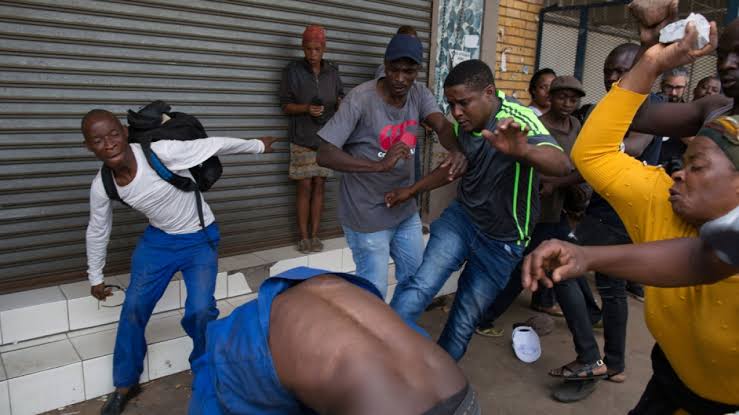
A growing number of Nigerians living in South Africa have raised alarm over worsening conditions following renewed xenophobic tensions, with many claiming they have been left homeless, unemployed, and fearful for their safety.
The distressed citizens are calling on both the Nigerian and South African governments to intervene urgently as reports of hostility toward foreign nationals continue to generate concern across affected communities.
According to several Nigerians stranded in different parts of South Africa, recent incidents linked to anti-immigrant sentiments have disrupted their livelihoods, forcing some to abandon businesses, homes, and jobs. Many say they are struggling to survive amid increasing uncertainty and economic hardship.
“We are hungry and homeless,” some of the affected individuals reportedly said while appealing for assistance from authorities and humanitarian organizations.
The latest concerns have reignited discussions about xenophobia in South Africa, a challenge that has periodically strained diplomatic relations between Pretoria and several African countries, including Nigeria. Over the years, attacks targeting foreign nationals have led to loss of lives, destruction of property, and widespread displacement.
Community leaders among the Nigerian diaspora say the current situation has left many families vulnerable. Some affected residents reportedly fear returning to their neighborhoods due to concerns about possible attacks, while others claim they have lost their primary sources of income.
Several victims alleged that businesses owned by foreign nationals have suffered declining patronage, vandalism, or closure as tensions escalated. Those who depended on such businesses for employment say they now face severe financial difficulties.
The development comes at a time when South Africa is grappling with economic challenges, including unemployment and rising living costs. Analysts note that anti-immigrant sentiments often intensify during periods of economic strain, as some citizens accuse foreign nationals of competing for jobs and limited resources.
However, rights groups have consistently argued that such perceptions are often based on misinformation and can fuel discrimination and violence against migrant communities.
Human rights advocates have called for greater efforts to promote social cohesion and protect vulnerable groups regardless of nationality. They stress that all residents deserve equal protection under the law and should not face attacks because of their country of origin.
Nigerians in South Africa form one of the largest African migrant communities in the country. Many relocated in search of education, employment, investment opportunities, and better economic prospects. Over the years, they have contributed significantly to sectors such as commerce, technology, healthcare, education, and entertainment.
Despite these contributions, relations between local communities and migrant populations have occasionally become strained, particularly during periods of social and economic uncertainty.
Diplomatic relations between Nigeria and South Africa have historically remained strong, with both countries regarded as major political and economic powers on the African continent. Nevertheless, previous outbreaks of xenophobic violence have prompted diplomatic engagements aimed at protecting citizens and strengthening bilateral cooperation.
Observers believe the latest appeals from stranded Nigerians could lead to renewed discussions between both governments regarding the welfare and security of foreign nationals.
The Nigerian government has previously condemned xenophobic attacks against its citizens and urged South African authorities to ensure the safety of all residents. In past incidents, Nigerian officials worked with diplomatic missions and community organizations to provide support for affected individuals.
Meanwhile, South African authorities have repeatedly stated that violence and discrimination against foreign nationals are unacceptable. Government officials have pledged to investigate incidents of violence and prosecute those responsible for criminal acts.
Civil society groups have also intensified calls for dialogue between communities to reduce tensions and address misconceptions surrounding migration. Experts argue that sustainable solutions require cooperation among governments, local leaders, businesses, and community organizations.
For many stranded Nigerians, however, immediate concerns remain focused on survival. Several individuals say they urgently need shelter, food, financial assistance, and protection while awaiting long-term solutions.
As authorities continue to monitor the situation, affected residents hope that their appeals will attract the attention needed to address their plight and restore a sense of security.
The latest reports serve as another reminder of the challenges faced by migrant communities across the world and the importance of promoting tolerance, inclusion, and peaceful coexistence in increasingly diverse societies.


