

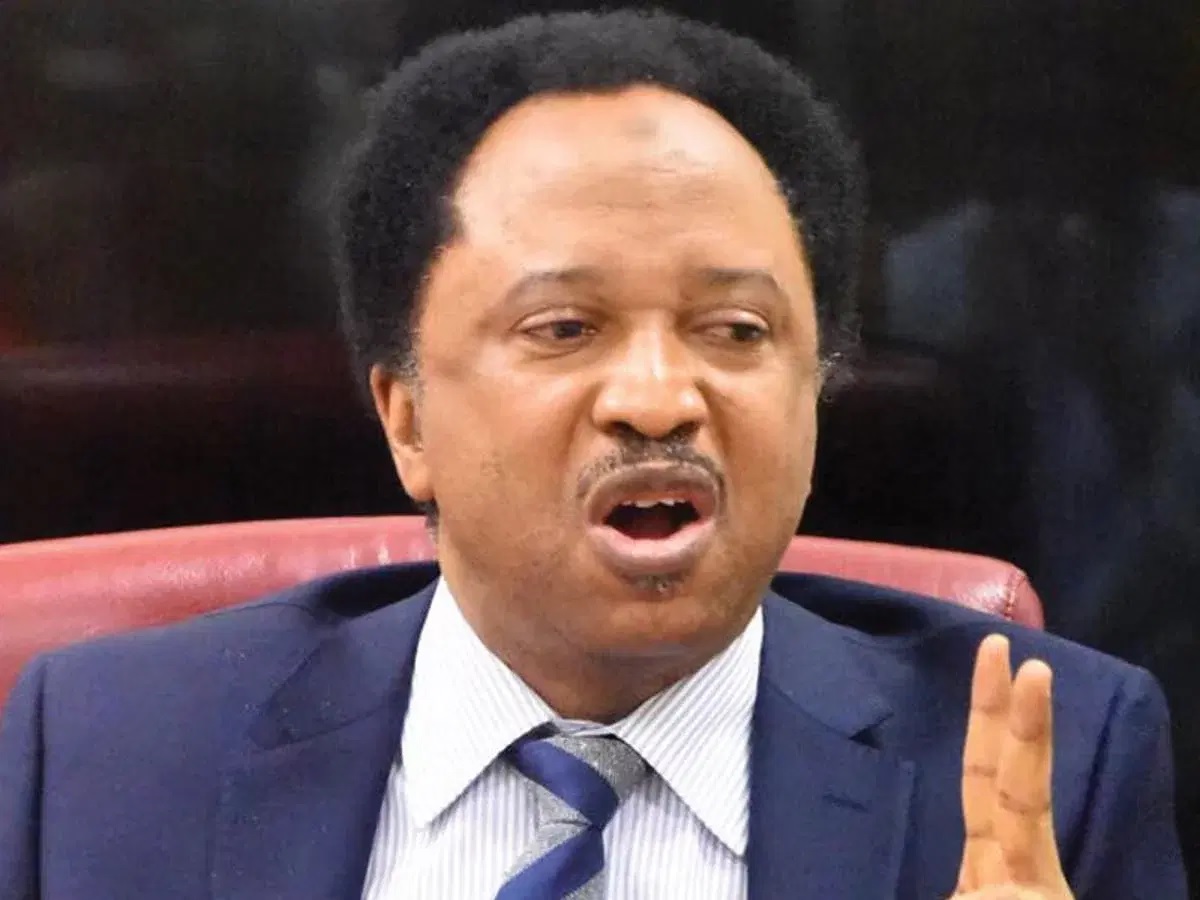
Former senator Shehu Sani has stirred fresh political debate after claiming that support for Peter Obi is largely tribal, while predicting that President Bola Tinubu will secure victory in the 2027 elections.
Sani made the remarks during an appearance on The Honest Bunch Podcast, where he engaged in a heated exchange with host Deji Adeyanju. The discussion centered on the evolving political landscape and the potential strength of opposition forces ahead of the next general elections.
During the conversation, Adeyanju argued that the African Democratic Congress (ADC) could emerge as a formidable platform capable of challenging the ruling party. However, Sani disagreed, downplaying Obi’s national appeal and asserting that much of his support is concentrated in the Southeast, particularly among Igbo voters.
Sani further suggested that even if Obi were to win an election, the outcome might not significantly alter Nigeria’s broader political and economic trajectory. He also made a controversial remark about electoral practices, joking that Nigerian elections often involve inducements such as “bags of rice,” a statement that has drawn criticism from some quarters.
The comments have reignited debates reminiscent of the 2023 elections, which saw Tinubu of the All Progressives Congress (APC) defeat Obi and other contenders. That election cycle was marked by allegations of irregularities and legal challenges, though the courts ultimately upheld Tinubu’s victory.
Supporters of Obi have strongly rejected Sani’s characterization, arguing that his political movement cuts across ethnic and regional lines. They point to his performance in several states outside the Southeast in 2023, as well as his popularity among young voters nationwide, as evidence of a broader base of support.
Critics of Sani’s remarks say framing political support along ethnic lines risks deepening divisions in an already polarized political environment. They emphasize the need for issue-based politics, particularly as Nigeria grapples with significant challenges.
Indeed, the debate comes at a time when the country is facing rising fuel prices, inflationary pressures, and persistent security concerns—issues that are expected to dominate political discourse as 2027 approaches.
Political analysts note that while ethnicity has historically played a role in Nigerian elections, recent trends suggest a gradual shift toward performance-based and issue-driven politics, especially among younger voters.
“Simplifying voter behavior to ethnicity alone overlooks the complexity of Nigeria’s evolving political dynamics,” one analyst observed.
As political actors continue to position themselves ahead of the next election cycle, statements like Sani’s highlight both the enduring influence of identity politics and the growing contest over national narratives.
With alliances forming and debates intensifying, the road to 2027 is shaping up to be another highly competitive and closely watched chapter in Nigeria’s democratic journey.


