

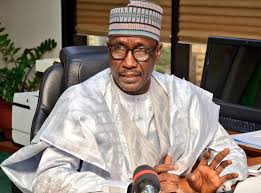
The Nigerian Senate has stepped up its investigation into the financial records of the Nigerian National Petroleum Company Limited (NNPCL), demanding the appearance of former Group Chief Executive Officer, Mele Kyari, over unresolved audit queries totaling approximately N210 trillion.
The development came during proceedings of the Senate Public Accounts Committee, which is currently reviewing the company’s financial operations between 2017 and 2023. Lawmakers say the probe has uncovered significant discrepancies that require urgent clarification from key officials involved in the management of the national oil company during the period under review.
Senate Flags Massive Unexplained Figures
According to committee members, the audit report identified about N103 trillion in unexplained expenditures and an additional N107 trillion categorized as receivables linked to fuel subsidies, joint venture operations, and other financial transactions.
The figures have raised concerns among lawmakers, who argue that such massive sums must be properly accounted for in line with public financial management regulations.
Senators expressed frustration over repeated failures by Kyari to honor invitations from the committee, despite multiple official summons requesting his appearance to clarify the financial records.
Lawmakers Demand Accountability
During a heated session, Senator Adams Oshiomhole, a member of the committee, criticized the repeated absence of the former NNPCL chief, questioning the reasons behind his failure to appear before lawmakers.
Oshiomhole insisted that no individual, regardless of status, should be allowed to ignore legislative oversight, especially in matters involving public funds of such magnitude.
He also raised concerns about reports suggesting Kyari had sought medical treatment abroad, questioning why such arrangements would prevent him from responding to parliamentary inquiries.
The senator stressed that the committee would not accept representation by proxies in place of the former oil chief, insisting that only direct testimony would satisfy the investigative process.
Committee Threatens Legal Action
Chairman of the Senate Public Accounts Committee, Senator Aliyu Wadada, warned that the panel may issue arrest warrants if Kyari continues to ignore official invitations.
He emphasized that the Senate’s constitutional mandate to oversee public expenditure must be respected and enforced without compromise.
Wadada stated that accountability in the oil sector is critical, given the strategic importance of petroleum revenue to Nigeria’s economy and national budget.
The committee has vowed to continue its investigation until all outstanding queries are fully resolved and properly documented.
NNPCL Responds to Allegations
In response to the ongoing scrutiny, the NNPCL has defended its financial records, arguing that the figures under review reflect complex industry transactions rather than unaccounted funds.
The company maintains that many of the disputed amounts are linked to legitimate liabilities, operational costs, and industry-specific financial structures such as joint venture arrangements and subsidy-related obligations.
Officials of the company have previously stated that misinterpretation of financial statements could lead to inflated figures being misrepresented as unaccounted expenditures.
NNPCL has also reiterated its commitment to transparency and cooperation with relevant oversight bodies.
Oil Sector Transparency Under Scrutiny
The ongoing investigation has once again placed Nigeria’s oil sector at the center of public debate over transparency and accountability.
Analysts say the scale of the figures involved underscores long-standing concerns about financial management in the petroleum industry, which remains the country’s primary source of foreign exchange earnings.
Experts argue that improved auditing systems, clearer reporting structures, and stronger institutional oversight are essential to restoring public confidence in the sector.
Political and Economic Implications
The Senate probe is expected to have significant political and economic implications, particularly as Nigeria continues efforts to reform its energy sector and attract foreign investment.
Observers note that accountability in the management of oil revenues is crucial for fiscal stability and national development planning.
The case has also intensified public interest in how revenues generated by the country’s largest state-owned enterprise are managed and reported.


