

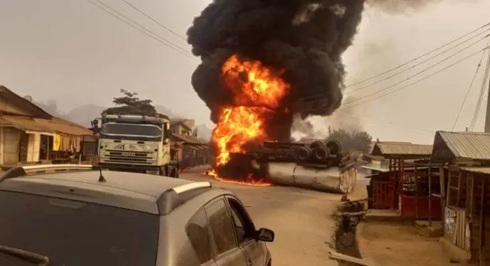
Residents and passersby on Igoba-Ado Road in Ondo State averted a potential disaster on Monday after swiftly extinguishing a fire that broke out on a Compressed Natural Gas (CNG) truck transporting gas along the busy roadway.
The incident occurred when flames reportedly emerged from the rear section of the vehicle, close to the wheel area, prompting alarm among motorists, traders, and residents in the vicinity.
Videos circulating on social media showed concerned locals rushing to the scene and making frantic efforts to contain the fire before it could spread to other parts of the truck. Using available materials and improvised firefighting methods, they were able to suppress the flames and prevent what many feared could have escalated into a major accident.
Witnesses said the fire appeared relatively small when it started but generated immediate concern because of the highly combustible nature of the cargo being transported.
Their quick intervention reportedly prevented injuries, fatalities, or damage to nearby vehicles and property.
As of the time of filing this report, no explosion had been reported and no casualties were recorded. Authorities had also not released an official statement detailing the cause of the fire or the condition of the vehicle involved.
The incident has, however, sparked renewed discussions about safety standards for the transportation of compressed natural gas and other hazardous materials on Nigerian roads.
Many social media users praised the courage and swift response of the residents who intervened, describing their actions as instrumental in preventing a potentially catastrophic situation.
Others raised concerns about safety equipment on the truck, with some observers questioning whether the vehicle was adequately equipped with functional fire extinguishers and other emergency response tools required for transporting combustible materials.
The incident comes at a time when Nigeria is actively promoting the adoption of CNG as an alternative energy source for transportation in an effort to reduce fuel costs and lessen dependence on conventional petroleum products.
Government officials have repeatedly highlighted the economic and environmental benefits of CNG-powered transportation, leading to increased investment in conversion centres, gas infrastructure, and distribution networks.
However, safety experts stress that the growing use of CNG must be accompanied by strict adherence to transportation regulations, vehicle maintenance standards, and emergency preparedness measures.
According to industry professionals, while CNG is generally considered a safe fuel when properly handled, accidents can occur if vehicles are poorly maintained or if safety protocols are ignored.
Road safety advocates have therefore called on regulatory agencies to intensify inspections of trucks carrying gas and other hazardous materials to ensure compliance with established standards.
They also emphasized the need for regular driver training, proper vehicle certification, and the availability of emergency response equipment.
The incident has further renewed calls for improved emergency response capacity on highways, particularly in areas where hazardous cargo frequently passes through densely populated communities.
Observers note that the successful containment of the fire by local residents underscores both the importance of community vigilance and the need for stronger institutional safety mechanisms.
As investigations into the cause of the fire continue, many Nigerians are hoping the incident will serve as a wake-up call for transport operators, regulators, and emergency management agencies to strengthen safety measures and prevent future occurrences.
For now, residents of Igoba-Ado Road are being commended for their quick action, which likely prevented a far more serious incident and ensured that lives and property were protected.


