
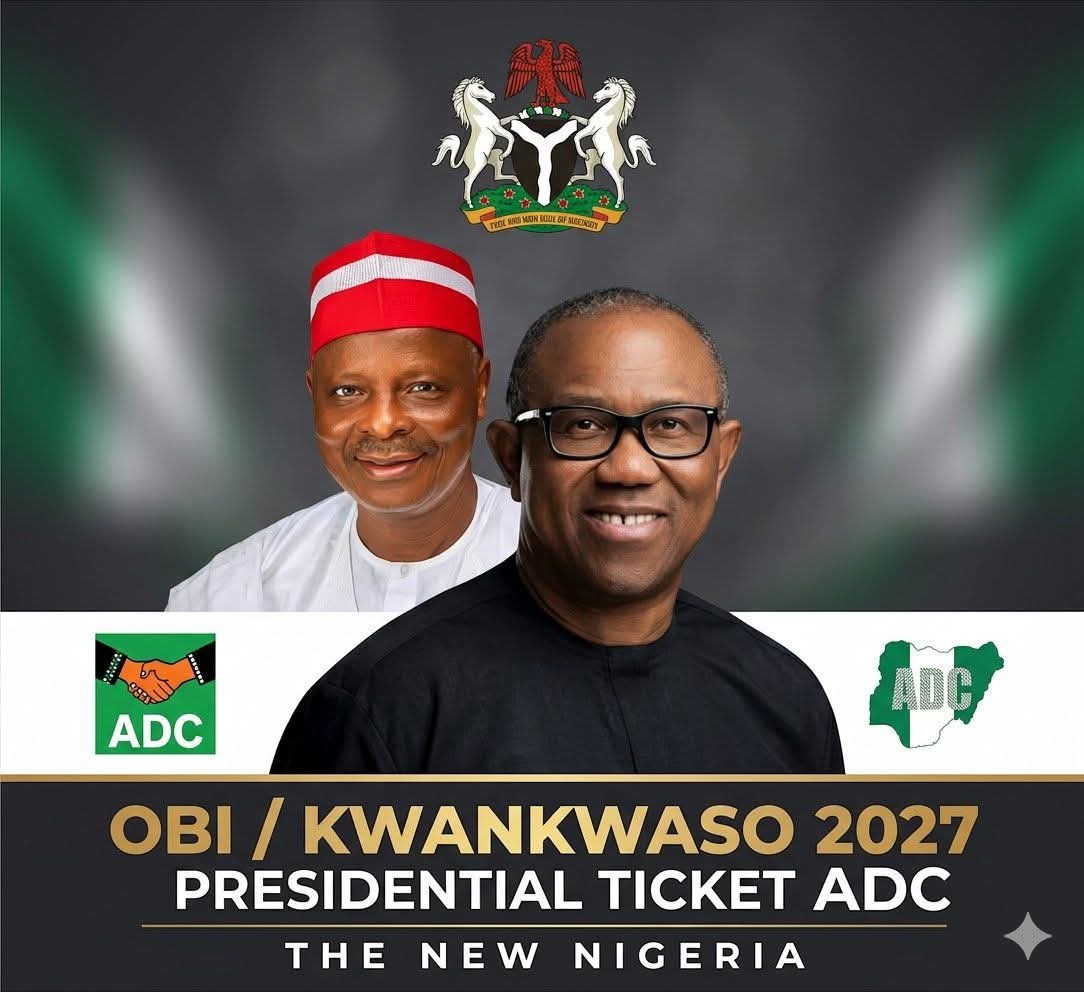
On Monday, 30th March, former Anambra State governor and presidential aspirant, Peter Obi, returned to Kano, the North’s commercial hub, at the invitation of his elder brother in politics, Senator Rabiu Musa Kwankwaso. Kwankwaso’s recent decision to join the African Democratic Congress (ADC) marks a major step in what Obi described as a collective effort to “rescue and rebuild our democracy and our nation, Nigeria.”
Addressing supporters and party members, Obi emphasized that the current period is critical for Nigeria, citing ongoing challenges including economic hardship, insecurity, unemployment, and declining public trust. He stressed that these challenges demand more than political rhetoric—they require collaboration, disciplined leadership, and a shared commitment to national progress.
Obi urged Nigerians to move beyond politics of division—ethnicity, religion, or region—and embrace competence, character, capacity, compassion, and commitment as guiding principles. “The task before us is not about winning elections alone; it is about rebuilding institutions, restoring confidence in governance, and securing a better future for our children,” he said.
Calling on all opposition forces and patriotic Nigerians to unite, Obi described the moment as defining for the nation—a time for unity over division, service over self-interest, and nation over personal ambition. He concluded with a message of hope and determination:
“A new Nigeria is possible, but it will require all of us, working together, making sacrifices, and staying committed to the vision of a just, equitable, and prosperous nation.”
The visit to Kano and Kwankwaso’s defection to the ADC underscore a growing momentum for Peter Obi’s campaign and signal a potential realignment of northern political support ahead of the 2027 elections.
Peter Obi Visits Kano as Kwankwaso Joins ADC, Calls for Opposition Unity

- Advertisement -

