

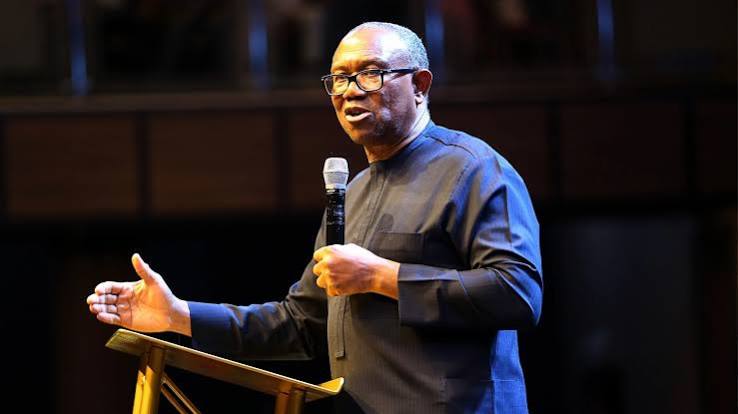
The presidential candidate of the Nigeria Democratic Congress (NDC), Peter Obi, has raised concerns over a recent warning by the United Nations regarding the deepening food crisis across northern Nigeria, urging authorities at all levels to take immediate and coordinated action to avert a worsening humanitarian disaster.
In a statement shared on his X account on Friday, Obi described the situation as deeply troubling, noting that northern Nigeria has traditionally served as the nation’s agricultural backbone. He said it was unacceptable that the country’s major food-producing region is now facing severe hunger, stressing that decisive leadership and effective policy implementation are urgently required.
The former Anambra State governor called on the Federal Government and state governments to make transparent and strategic investments in securing agricultural corridors, protecting farming communities, and empowering smallholder farmers with access to finance, inputs, and modern farming support.
Obi also urged closer collaboration with the World Food Programme (WFP) and other humanitarian partners to bridge critical funding gaps before the food emergency escalates further.
Referring to the WFP’s latest assessment, Obi noted that more than 17 million people across nine northern states are currently experiencing crisis-level hunger, while over 35 million Nigerians could face severe food insecurity during the ongoing lean season. He further highlighted reports indicating that more than 10,000 residents of Borno State have entered what humanitarian agencies classify as catastrophic hunger conditions.
According to Obi, persistent insecurity—including insurgency, terrorism, and banditry—has prevented thousands of farmers from accessing their farmlands, significantly reducing agricultural output and worsening food shortages across the region. He stressed that restoring security to farming communities must become a national priority if Nigeria is to achieve sustainable food production.
Beyond emergency interventions, Obi advocated production-driven economic policies focused on expanding cultivated land, increasing agro-industrial capacity, improving rural infrastructure, and boosting agricultural productivity. He maintained that Nigeria possesses the natural resources, fertile land, and human capital necessary to overcome hunger and substantially reduce poverty through deliberate and sustained policy actions.
Concluding his remarks, Obi expressed optimism that a Nigeria free from widespread hunger and mass poverty remains achievable if leaders place the welfare, livelihoods, and food security of citizens at the centre of governance and national development priorities.


