

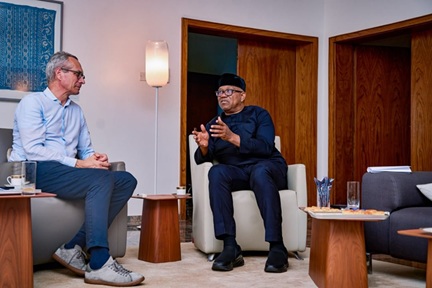
Former Anambra State Governor and Nigeria Democratic Congress (NDC) presidential candidate, Peter Obi, has reaffirmed the importance of international partnerships in advancing Nigeria’s development, following a meeting with the Swiss Ambassador to Nigeria, Mr. Patrick Egloff.
Obi disclosed that the meeting focused on strengthening cooperation in key sectors critical to national development, including education, healthcare and poverty reduction. He described the discussions as productive and centred on practical ways to improve the quality of life for Nigerians through sustained collaboration.
According to Obi, investment in human capital remains fundamental to achieving long-term economic growth and social progress. He noted that education and healthcare are essential pillars of national development and should remain priorities for both government and development partners.
“I met with the Swiss Ambassador to Nigeria, Mr. Patrick Egloff, and we had a productive and engaging discussion on our country’s developmental journey, with particular emphasis on the critical sectors that drive development: education, healthcare, and lifting people out of poverty,” Obi said.
The former governor also expressed appreciation to the Swiss Confederation for its longstanding support for Nigeria across several areas, including economic cooperation, humanitarian assistance, cultural exchange and peace-building initiatives.
He particularly acknowledged Switzerland’s contributions to stabilisation and humanitarian programmes in Nigeria’s North-East, a region that has faced prolonged security and humanitarian challenges resulting from insurgency and displacement.
Obi stressed that stronger partnerships built on shared values, mutual respect and a commitment to human development would play an important role in addressing Nigeria’s socio-economic challenges.
He maintained that collaboration between Nigeria and international partners should focus on creating opportunities for citizens, strengthening institutions and improving access to quality public services.
Political observers noted that Obi has consistently advocated increased investment in education, healthcare and poverty alleviation as central components of his policy agenda. Analysts believe his engagement with foreign diplomats reflects efforts to promote international cooperation on issues affecting Nigeria’s development.
Development experts also emphasise that partnerships with countries such as Switzerland have contributed to programmes in governance, humanitarian relief, vocational training, health services and conflict resolution across Nigeria. They argue that sustained international cooperation can complement domestic reforms aimed at accelerating economic growth and improving social welfare.
The meeting comes at a time when Nigeria continues to seek greater international collaboration to tackle poverty, improve healthcare delivery and expand access to quality education amid ongoing economic challenges.
Stakeholders in the development sector have welcomed continued dialogue between Nigerian leaders and development partners, noting that coordinated efforts are essential to achieving sustainable development goals and improving living standards.
Obi concluded by reiterating his vision for a more prosperous and inclusive nation, expressing optimism that stronger partnerships and people-centred policies could help unlock Nigeria’s vast potential.
“A New Nigeria is Possible,” he said, reaffirming his belief that effective leadership, sound policies and meaningful collaboration remain the foundation for national transformation.
The discussions with the Swiss ambassador underscore the growing importance of international partnerships in supporting Nigeria’s development aspirations and fostering solutions to the country’s most pressing social and economic challenges.


