

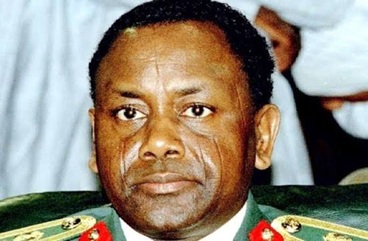
A former Assistant Director of the Department of State Services (DSS), Dennis Amachree, has offered his account of the circumstances surrounding the death of former Head of State, General Sani Abacha, stating that the late military ruler died during an intimate encounter at the Presidential Villa in Abuja.
Amachree made the remarks during a recent interview, revisiting one of the most debated episodes in Nigeria’s political history. According to him, Abacha’s death in June 1998 occurred while the former military leader was in the company of women brought into the Presidential Villa, contrary to the numerous conspiracy theories that have circulated over the years.
The former DSS official said intelligence available to security agencies at the time did not support claims that Abacha was assassinated or poisoned by foreign agents, as widely speculated following his sudden death.
Instead, Amachree maintained that the former Head of State suffered a fatal medical emergency during the private encounter, adding that the official security reports available to him did not indicate any evidence of foul play.
“The information available to us at the time did not point to assassination. It was a medical incident that occurred during an intimate encounter,” he said.
General Abacha, who seized power in November 1993, died suddenly on June 8, 1998, at the Presidential Villa in Abuja after nearly five years in office. His unexpected death marked a turning point in Nigeria’s political history, paving the way for General Abdulsalami Abubakar to assume leadership and oversee the country’s transition to democratic rule in 1999.
For decades, the circumstances surrounding Abacha’s death have remained the subject of speculation, with various theories alleging poisoning, foreign involvement and internal political conspiracies. However, no official inquiry has conclusively established evidence supporting those claims.
Amachree’s account has reignited public discussion about the final hours of the former military ruler, with historians and political analysts noting that many details surrounding the event remain contested due to the absence of a comprehensive public investigative report.
Some commentators believe the former intelligence officer’s account adds to the historical record, while others argue that differing narratives surrounding Abacha’s death underscore the need for careful evaluation of available evidence.
Legal and historical experts also caution that recollections by former public officials represent personal accounts unless supported by official documentation or independently verified evidence. They emphasise the importance of distinguishing eyewitness testimony, institutional records and long-standing public speculation when assessing historical events.
Abacha’s administration remains one of the most controversial periods in Nigeria’s history, marked by allegations of human rights abuses, political repression and widespread corruption, alongside significant investments in infrastructure and reported improvements in foreign reserves. His legacy continues to divide public opinion nearly three decades after his death.
The renewed discussion generated by Amachree’s remarks highlights the enduring public interest in one of Nigeria’s most significant political transitions. As historians continue to examine the events surrounding Abacha’s final days, many observers maintain that the full historical record should be guided by credible evidence, official documentation and balanced scholarship rather than speculation alone.


