

Global oil prices surged on Monday after United States President Donald Trump rejected an Iranian proposal for a seven-day truce, raising fresh concerns about the future of energy supplies through the strategic Strait of Hormuz.
Brent crude jumped more than three per cent at the start of trading, moving back above $107 per barrel after falling by more than two per cent on Friday when news of Iran’s proposal initially raised hopes of a diplomatic breakthrough.
The latest price movement reflects renewed uncertainty over the conflict between Washington and Tehran and its potential impact on global oil supplies. The Strait of Hormuz, through which a significant share of the world’s energy supplies normally passes, has become a central point of the confrontation.
Iran presented its proposed seven-day truce during the United Nations General Assembly in New York. The proposal included reopening the Strait of Hormuz and returning to negotiations over its nuclear programme.
Iranian Foreign Minister Abbas Araghchi said Tehran remained open to diplomacy but insisted that its conditions for reopening the waterway had to be met. Those conditions included an end to hostilities, the lifting of sanctions on Iranian oil, the release of frozen Iranian assets and an end to the US naval blockade of Iranian ports.
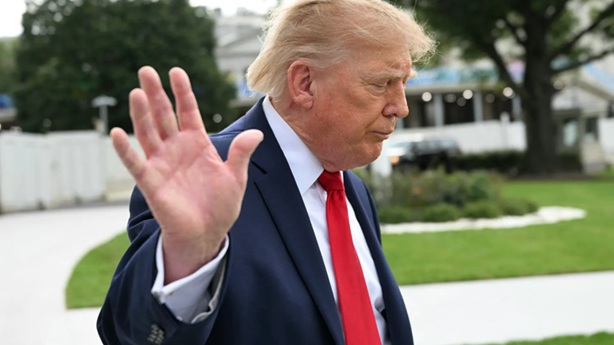
Trump, however, rejected the proposal. “They made a proposal but I reject it,” the US president told reporters outside the White House, although he subsequently said he expected negotiations with Iran to resume during the week.
The conflicting positions have left financial markets assessing the possibility that disruption around the Strait of Hormuz could continue.
Reuters reported that Brent futures were trading around $107 per barrel on Monday, while concerns about renewed inflationary pressure contributed to higher bond yields and weakness in several Asian stock markets.
Markets had reacted positively to earlier signs of possible diplomacy. On September 23, oil prices fell after Trump said US and Iranian representatives had held what he described as productive talks at the United Nations. Brent subsequently traded below $100 per barrel before the latest developments reversed some of those gains.
The renewed increase in crude prices could have wider economic consequences because higher energy costs can feed into transportation, manufacturing, electricity generation and consumer prices.
For oil-producing countries such as Nigeria, higher crude prices can potentially increase government and export revenues. However, the effect on the Nigerian economy also depends on domestic production levels, refining capacity, petroleum-product pricing and other fiscal and foreign-exchange conditions.
The implications for Nigerian motorists and consumers could also depend on how long the international price increase lasts and how domestic refiners and fuel marketers respond. Earlier in September, Brent’s rise above $107 per barrel had already raised concerns about further pressure on petrol prices in Nigeria.
Beyond oil markets, the latest development has renewed attention on the broader geopolitical consequences of the conflict. Iran continues to maintain that it will not abandon its conditions for reopening the Strait, while US officials have criticised Tehran’s demands as unacceptable.
Despite Trump’s rejection of the seven-day proposal, his indication that talks could resume suggests that diplomatic contacts have not completely broken down. Reuters reported that indirect US-Iran talks could potentially take place as early as Monday.
For global energy markets, however, uncertainty remains the immediate concern. Any further escalation around the Strait of Hormuz could put additional pressure on crude supplies and prices, while a credible diplomatic breakthrough could ease some of that pressure.
Until either development occurs, traders are likely to continue closely monitoring military activity, tanker movements through the waterway and signals from Washington and Tehran for indications of where the conflict is heading.


