

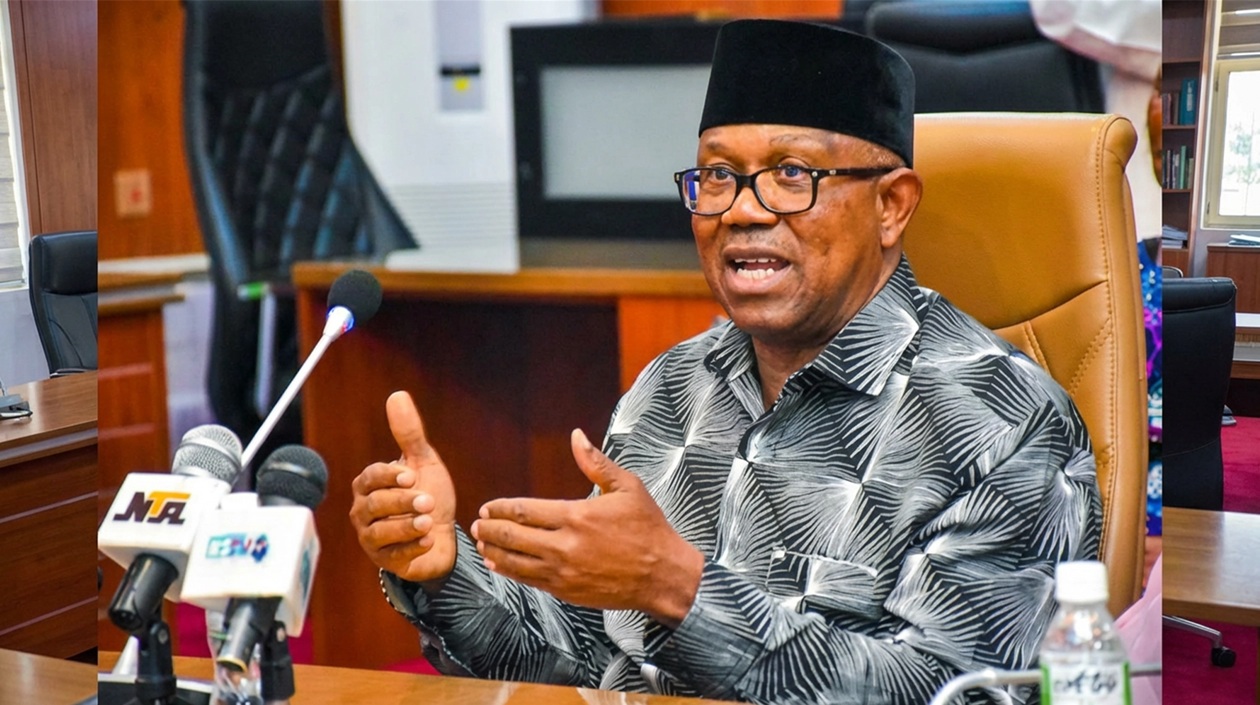
A growing conversation among Nigerians on social media has centered on the role of integrity in public office, with many supporters citing Peter Obi as an example of the kind of ethical leadership they believe the country needs.
The discussion gained traction following a post by commentator Agarau, who praised Obi’s record as governor of Anambra State and argued that Nigeria’s political future depends on leaders whose personal conduct reflects accountability and transparency.
Supporters point to Obi’s tenure as governor, highlighting claims that he left office with substantial state savings, improved educational infrastructure, upgraded healthcare facilities, and avoided burdening the state with excessive debt. They argue that these achievements contributed to his popularity among many young Nigerians during the 2023 presidential election, where he secured more than six million votes as the candidate of the Labour Party.
Many of these supporters now see his emergence as a leading figure in the Nigeria Democratic Congress (NDC) as an opportunity to advance a governance model rooted in prudence, accountability, and public service.
The conversation reflects a broader public desire for leaders perceived as honest and free from major corruption scandals. For many citizens frustrated by economic hardship, insecurity, and governance challenges, integrity has become an increasingly important criterion in evaluating political candidates.
However, not all observers agree with the emphasis placed on personal morality. Critics argue that while integrity is important, effective governance also requires political strategy, institutional reform, coalition-building, and the ability to navigate complex national challenges. Some contend that focusing exclusively on character risks oversimplifying the demands of leadership.
The debate has also revived discussions surrounding the offshore business interests revealed in the Pandora Papers. Obi has previously maintained that the companies referenced were established before he became governor and that his actions complied with applicable laws and disclosure requirements.
Despite differing views, the discussion highlights a recurring theme in Nigerian politics: the search for leaders who can combine competence with ethical conduct.
Political analysts note that public trust in institutions often depends not only on policies and performance but also on perceptions of integrity among those who hold public office. As preparations for the 2027 elections continue, questions about character, transparency, and accountability are likely to remain central to political discourse.
Whether viewed as a symbol of ethical leadership or as a politician whose record deserves scrutiny like any other, Obi’s role in the national conversation underscores the enduring importance many Nigerians attach to integrity in governance.


