

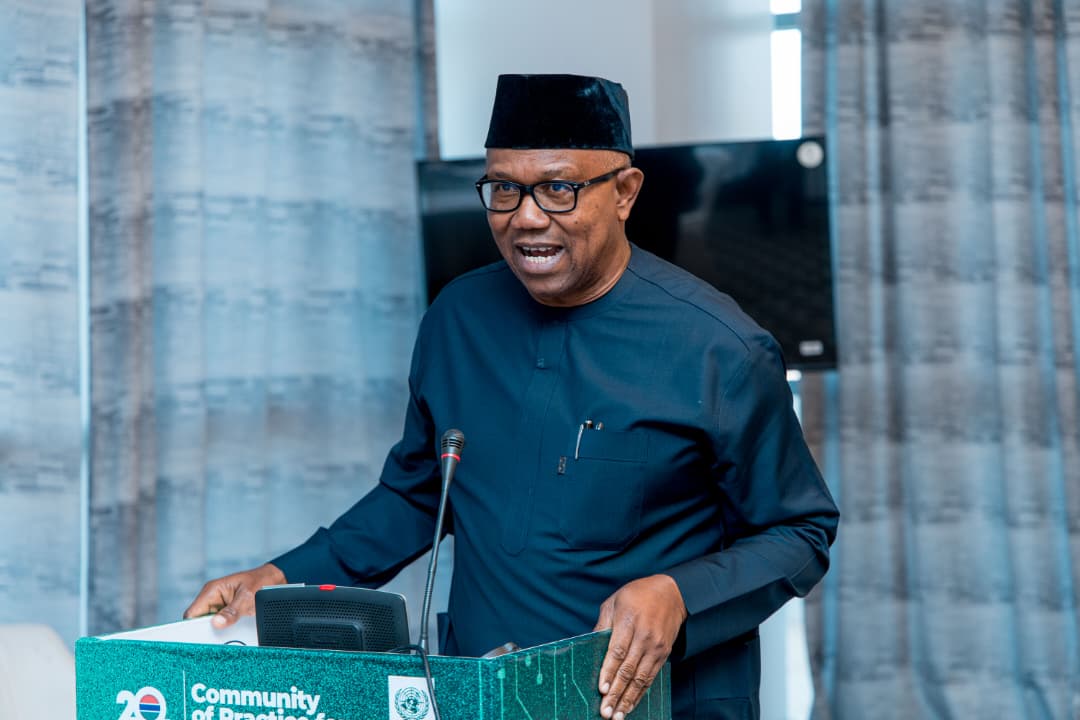
Former presidential candidate Peter Obi has expressed concern over what he describes as a troubling pattern of cancelled speaking engagements at Nigerian universities, warning that the trend could undermine academic freedom and open dialogue in the country.
Obi, who ran under the Labour Party in the 2023 elections, said more than ten of his scheduled appearances at tertiary institutions have been cancelled in recent times. Among the most recent, he cited a planned engagement at Obafemi Awolowo University (OAU) on April 25, 2026, as well as an earlier cancellation at his alma mater, the University of Nigeria Nsukka (UNN).
According to Obi, these repeated cancellations raise serious questions about the state of intellectual freedom within Nigeria’s academic institutions. He argued that universities should serve as spaces for robust debate, diverse viewpoints, and engagement with national issues, rather than arenas where voices are restricted.
Supporters of the former Anambra governor have echoed his concerns. Activist Aisha Yesufu and others have alleged that the cancellations may not be coincidental, suggesting possible political interference aimed at limiting Obi’s influence, particularly as the country gradually moves toward the 2027 general elections.
Some supporters also pointed to instances where Obi’s planned visits—often involving donations or support to schools—were reportedly blocked, including outreach efforts linked to institutions such as Chibok Government Secondary School. They argue that such actions, if proven, could discourage public-spirited engagement and philanthropic support for education.
Obi contrasted the domestic situation with his experiences abroad, noting that he has delivered lectures and participated in discussions at prestigious global institutions, including University of Oxford, Harvard University, Yale University, and Princeton University. He suggested that the openness of such platforms highlights the importance of protecting academic spaces as centers of free thought.
However, university authorities in Nigeria have not uniformly responded to the allegations, and in some cases, reasons for cancellations have ranged from logistical constraints to scheduling conflicts. Analysts caution against drawing definitive conclusions without official clarification from the institutions involved.
Critics of Obi’s position argue that event cancellations are not uncommon and may not necessarily indicate a coordinated effort to silence any individual. They urge a more cautious interpretation of the situation, emphasizing the need for verified evidence.
Nevertheless, the issue has sparked wider debate about the autonomy of Nigerian universities and the role they play in fostering democratic discourse. Education stakeholders warn that any perception of political interference could erode public confidence in academic institutions.
As discussions continue, Obi has reiterated the need to safeguard universities as neutral platforms where ideas can be freely exchanged, regardless of political affiliation. The controversy, coming amid heightened political activity ahead of 2027, underscores the growing intersection between education, public engagement, and national politics.
Whether the concerns raised will prompt institutional responses or policy changes remains uncertain, but the conversation has already drawn attention to the importance of preserving academic independence in Nigeria’s evolving democratic landscape.


