

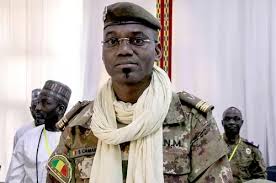
Mali’s military government has announced that it repelled a large-scale coordinated assault by militant groups across multiple regions of the country, but the clashes came at a heavy cost with the reported death of a key defence figure.
According to official accounts, the attacks were launched on April 25 by fighters linked to Jama’at Nusrat al-Islam wal-Muslimin (JNIM), alongside Tuareg separatists associated with the Azawad Liberation Front. The coordinated strikes targeted military installations stretching from the Kati base near the capital Bamako to northern strongholds including Kidal and Gao.
Authorities confirmed that a senior defence official—identified as a central figure in Mali’s 2020 and 2021 military takeovers—was killed during the assault. His death has prompted the declaration of a national mourning period, underscoring the severity of the attack and its symbolic impact on the ruling junta.
Military sources reported that Malian forces, supported by Russia’s Africa Corps, mounted a strong counteroffensive, claiming to have killed or captured hundreds of attackers. While these figures have not been independently verified, officials described the response as decisive in preventing the militants from overrunning key installations.
By April 26, authorities said the situation in Bamako had largely stabilized, although a curfew remained in place as a precautionary measure. Residents reported heightened security presence and restricted movement as the government worked to maintain control and prevent further attacks.
Despite the reported success in repelling assaults in central areas, developments in the north highlighted ongoing vulnerabilities. Insurgent forces were said to have taken control of the Governor’s Palace in Kidal following a withdrawal of government troops, raising concerns about the state’s grip on contested territories.
Security analysts say the incident reflects the evolving and complex nature of conflict in the Sahel region, where jihadist groups, separatist movements, and shifting alliances continue to challenge state authority. Mali, in particular, has faced persistent instability since the coups, with the military government prioritizing security operations amid strained relations with some Western partners.
The involvement of Russian-linked forces has also drawn international attention, as Mali deepens its security cooperation with non-Western actors in its fight against insurgency. While authorities credit this partnership with strengthening their response capabilities, critics argue that long-term stability will require more than military solutions.
Humanitarian organizations warn that continued violence risks worsening displacement and humanitarian conditions in affected regions, where civilians often bear the brunt of fighting.
The latest attacks serve as a stark reminder of the fragile security environment in Mali and the broader Sahel. While the government has framed the outcome as a tactical victory, the loss of a senior defence leader and the partial territorial setbacks in the north suggest that the conflict remains far from resolved.
As Mali observes a period of mourning, attention now turns to how the junta will recalibrate its strategy in the face of persistent and adaptive militant threats.


