

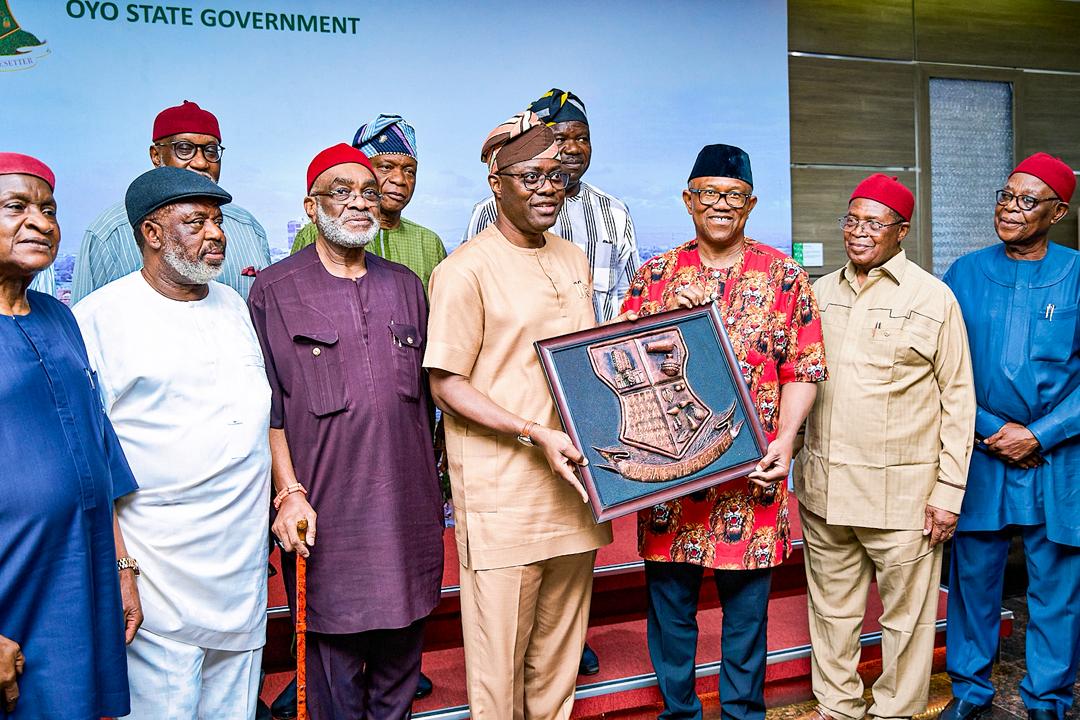
Former presidential candidate Peter Obi has continued his nationwide political consultations with a high-level meeting in Ibadan, engaging Seyi Makinde on issues of governance, democracy, and national unity.
The meeting, which took place on April 28, 2026, in Ibadan, brought together Obi and a delegation of South-East leaders as part of ongoing efforts to build alliances ahead of the 2027 general elections.
Speaking after the discussions, Obi described the engagement as part of broader consultations aimed at shaping a more inclusive and development-driven Nigeria. He emphasized the need for collaboration across regions, noting that the country’s challenges require collective solutions beyond party or ethnic lines.
Governor Makinde, in his remarks, struck a conciliatory tone, referring to Obi as “my brother” and confirming that their discussions included possible political coalitions. His comments have fueled speculation about emerging alignments within Nigeria’s opposition landscape.
The visit also included a courtesy call at the palace of the Olubadan, underscoring the importance of traditional institutions in Nigeria’s political and social framework.
Political observers say the Ibadan meeting fits into a larger pattern of outreach by Obi, who has in recent months engaged with various stakeholders across the country. These efforts are widely seen as part of a strategy to build a broad-based coalition capable of challenging the ruling All Progressives Congress (APC) in 2027.
Supporters of Obi have praised the move as a sign of maturity and commitment to national unity, arguing that cross-regional engagement is essential for fostering trust and building a viable opposition front.
However, critics have questioned aspects of the outreach, including the composition of his delegation and whether such consultations will translate into concrete political agreements.
Analysts note that while early consultations are crucial, the success of any coalition will depend on the ability of key actors to manage competing ambitions and agree on a shared vision.
“The challenge is not just meeting, but aligning interests,” one political analyst observed. “Coalitions succeed when there is clarity, compromise, and commitment.”
As Nigeria edges closer to the 2027 elections, such meetings are expected to intensify, with political leaders seeking to consolidate influence and shape the direction of the country’s future leadership.
For now, the Ibadan consultations highlight the growing momentum around opposition realignments and the central role dialogue will play in determining the political landscape in the coming years.


