

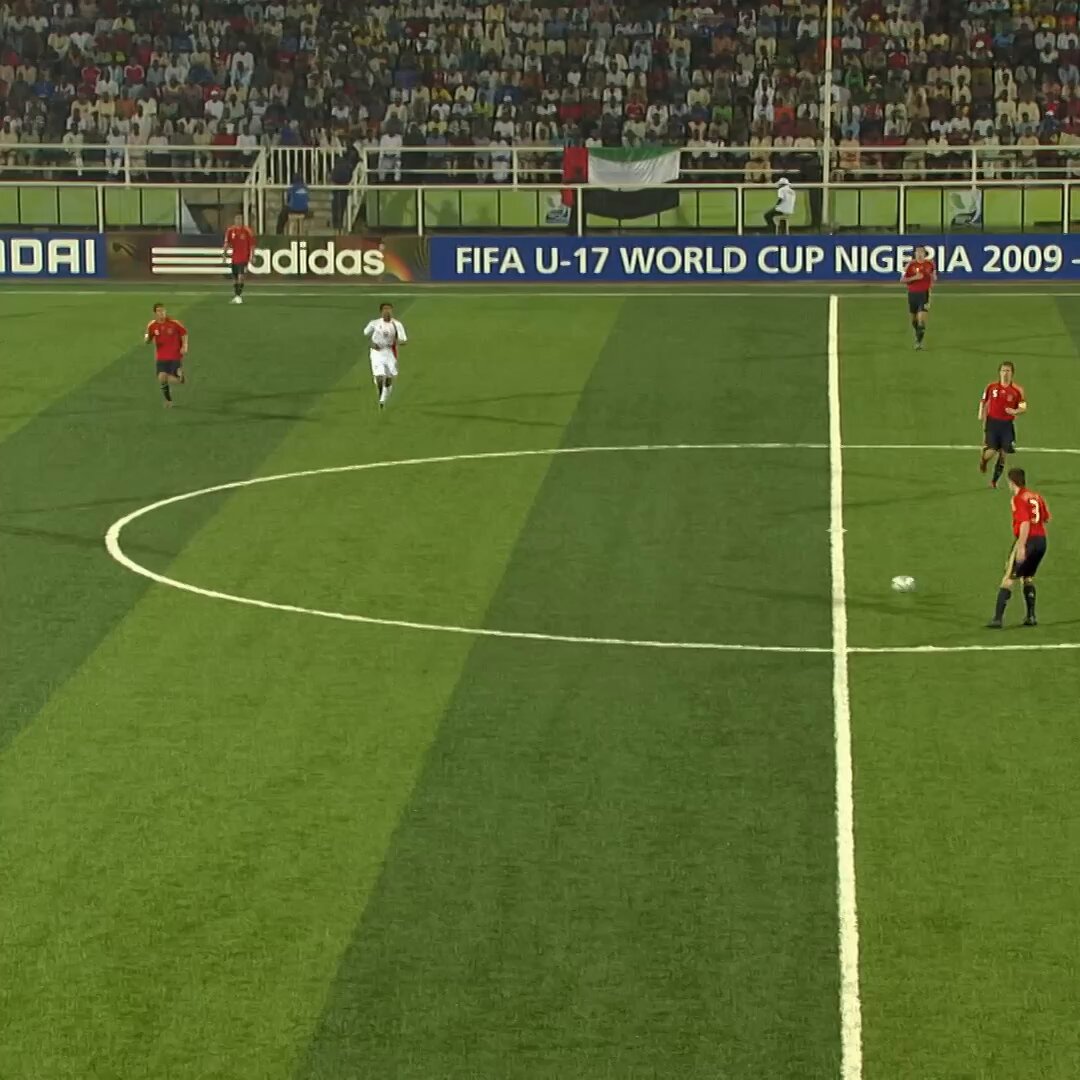
A resurfaced football clip featuring Isco has stirred nostalgia among Nigerian football fans, reviving memories of the country’s successful hosting of the 2009 FIFA U-17 World Cup—while also igniting fresh concerns over the current state of its sporting infrastructure.
The footage, taken during Spain’s 3–1 victory over the United Arab Emirates at the Sani Abacha Stadium, showcases a vibrant atmosphere and a pristine playing surface that once symbolized Nigeria’s readiness to host global tournaments. The competition, held between October 24 and November 15, 2009, was staged across eight venues nationwide, all upgraded to meet international standards despite security challenges in parts of the country at the time.
The tournament introduced the world to a generation of football stars, including Brazil’s Neymar and Casemiro, as well as Nigeria’s own Ogenyi Onazi. In a historic final, Switzerland national under-17 football team defeated host nation Nigeria on penalties to lift the trophy.
However, the resurfaced clip has also drawn attention to a stark contrast between past glory and present reality. Fans have flooded social media with recent images of the same stadium, showing visible deterioration—overgrown weeds, faded seating, and a worn-out pitch—particularly during domestic league matches involving Kano Pillars.
The comparison has fueled widespread criticism of poor maintenance culture and neglect of public sports facilities. Analysts say Nigeria’s inability to sustain infrastructure built for major events reflects a broader systemic issue, where investments are made without long-term maintenance plans.
Concerns have also been raised about Nigeria’s readiness to host international fixtures, as many stadiums reportedly fail to meet the standards set by the Confederation of African Football. This has led to disqualifications of several venues from hosting matches, including those tied to qualifiers for global competitions.
Football stakeholders argue that beyond nostalgia, the issue has real implications for the development of the sport. Poor facilities can affect player performance, fan engagement, and the country’s ability to attract international events.
“There is a gap between what we achieved in 2009 and what we have sustained since then,” one sports analyst observed. “Infrastructure is not just about building—it’s about preserving.”
The renewed conversation has prompted calls for urgent government intervention, public-private partnerships, and accountability in the management of sports facilities.
For many Nigerians, the viral clip is more than a throwback—it is a reminder of what once was, and a challenge to restore the nation’s football infrastructure to a level worthy of its rich sporting heritage.


