

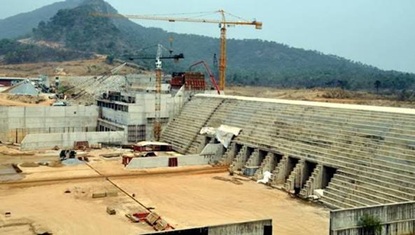
Nigeria has secured a major victory in its long-running international arbitration dispute with Sunrise Power and Transmission Company Limited over the Mambilla Hydroelectric Power Project in Taraba State.
An arbitration tribunal constituted under the International Chamber of Commerce in Paris ruled in favour of Nigeria on Thursday, September 17, 2026, rejecting claims by Sunrise that could have exposed the country to more than $3.38bn in liabilities.
The dispute has been ongoing for almost nine years and is linked to a 2003 agreement concerning the development of the Mambilla hydroelectric project.
Sunrise had commenced arbitration proceedings against Nigeria in October 2017, seeking about $2.354bn over an alleged breach of contract relating to the proposed construction of a 3,050-megawatt hydroelectric plant under a build-operate-transfer arrangement.
The company subsequently pursued another claim connected to a 2020 settlement agreement between the parties. That claim sought $400m, comprising a $200m settlement sum and a further $200m default payment.
The ICC tribunal rejected both sets of claims.
It also ruled that Leno Adesanya, the promoter of Sunrise Power, was bound by the arbitration agreement and that the tribunal had jurisdiction over Nigeria’s counterclaim against him and his company.
Beyond rejecting the claims, the tribunal ordered Sunrise and Adesanya to reimburse 75 per cent of Nigeria’s legal fees and expenses incurred in the arbitration.
The amount awarded to Nigeria for legal fees and expenses was approximately $11.82m. Of that amount, $2.5m is to be recovered from funds held in escrow by the ICC, while the remaining $9.32m is payable by Sunrise and Adesanya, with interest at 10 per cent annually until payment.
The arbitration costs were fixed at approximately $1.66m, with Sunrise and Adesanya responsible for 75 per cent and Nigeria for the remaining 25 per cent.
Reacting to the ruling, President Bola Tinubu commended the Federal Ministry of Justice and the legal team that represented Nigeria.
The President also acknowledged the participation of former President Olusegun Obasanjo and the late former President Muhammadu Buhari, who testified during the arbitration proceedings.
Tinubu said the case dated back to an agreement for the construction of a 3,050MW hydroelectric plant in Taraba State, but noted that the Federal Executive Council had not authorised the original contract.
He also commended former Ministers of Power Babatunde Fashola and Suleiman Adamu, as well as other witnesses and experts who participated in Nigeria’s defence.
The President described the ICC ruling as removing the “single biggest legal hurdle” that had stalled the Mambilla project for years.
The project, however, has undergone significant changes since the original agreement.
The proposed capacity has been reduced from the original 3,050MW design to approximately 1,500MW as part of efforts to make the project more financially viable and bankable. Earlier government assessments had placed the original project cost in the range of several billion dollars, while the rescoped project has been estimated at about $4bn.
The Mambilla project is one of Nigeria’s major planned hydroelectric developments. Its proposed location in Taraba State and potential generation capacity have made it a longstanding part of government plans to expand the country’s electricity supply.
The latest arbitration ruling does not, by itself, mean that electricity generation from Mambilla will begin immediately. Rather, it removes a major legal dispute surrounding the project and could allow the Federal Government to focus on the next stages of its development.
The government has yet to provide a new completion timetable following the arbitration ruling.
The case also illustrates the legal and financial complications that have surrounded the project for more than two decades, beginning with the original 2003 agreement and continuing through the 2017 arbitration and subsequent 2020 settlement.
With the ICC tribunal rejecting Sunrise Power’s claims and awarding Nigeria a substantial portion of its legal costs, attention is now expected to shift towards the Federal Government’s plans for advancing the revised Mambilla hydroelectric project.
The project’s eventual completion would still depend on financing, contracting, construction and other technical and administrative processes.
For now, however, the arbitration ruling has removed a major legal dispute that had remained associated with the development of one of Nigeria’s most ambitious proposed power projects.


