

A renewed American crackdown on transnational drug cartels has intensified public attention around the long-running legal battle over historical U.S. records relating to President Bola Ahmed Tinubu, although the two matters are legally distinct.
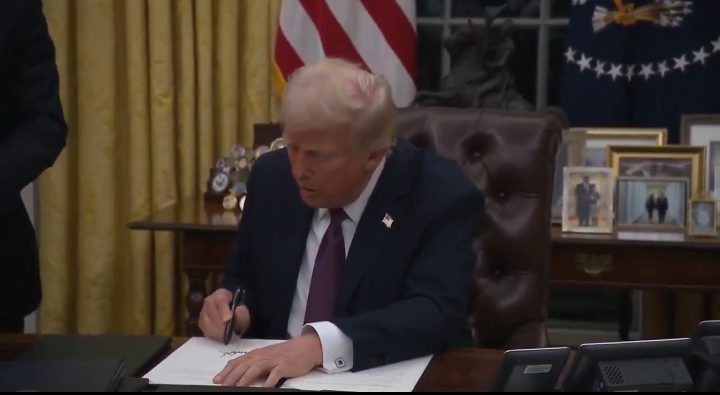
President Donald Trump signed Executive Order 14157 on January 20, 2025, directing the designation of certain cartels and other organisations as Foreign Terrorist Organizations (FTOs) and Specially Designated Global Terrorists (SDGTs). During the signing ceremony, Trump said the move was something “people have wanted to do for years” and argued that cartels were responsible for enormous numbers of American deaths. He estimated the annual toll at between 250,000 and 300,000 Americans. That figure was Trump’s own estimate and should not be treated as an independently established mortality statistic.
The tougher U.S. posture inevitably brings renewed scrutiny to the separate FOIA litigation concerning historical FBI, DEA and other U.S. government records relating to Tinubu.
The case is currently before the U.S. District Court for the District of Columbia, where American transparency activist Aaron Greenspan is seeking records from U.S. government agencies. The agencies have produced 399 pages of records, with portions redacted, and the FBI recently submitted additional material to Judge Beryl Howell under seal and for private judicial review.
Tinubu’s legal team has opposed disclosure of the records, arguing that they should remain withheld or redacted. Recent court filings confirm that the President himself is participating in the proceeding as an intervenor.
The Presidency has strongly disputed interpretations of the litigation, stressing that it is a civil Freedom of Information Act records-disclosure dispute, not a criminal prosecution of Tinubu, and that no U.S. court has found the President guilty of criminal wrongdoing.
That distinction is important. The existence of FBI or DEA records does not by itself establish criminal conduct, and the contents of the sealed material have not been publicly established.
Nevertheless, the convergence of America’s increasingly aggressive approach to international drug trafficking and the continuing litigation over historical U.S. law-enforcement records has created renewed political and public interest in the Tinubu files.
The central issue now is whether the American court will ultimately order the disclosure of records that remain sealed or withheld, and, if disclosure occurs, what those records actually contain.
For Nigerians watching the proceedings, the question is therefore not whether Trump’s cartel policy proves anything about Tinubu—it does not—but whether the U.S. judicial process will eventually provide greater public access to the historical records being sought.
The question hanging over the case is straightforward: as the United States intensifies its fight against international drug trafficking, will the long-sealed records relating to the historical investigation involving Tinubu eventually become public—or will they remain protected from disclosure?


