

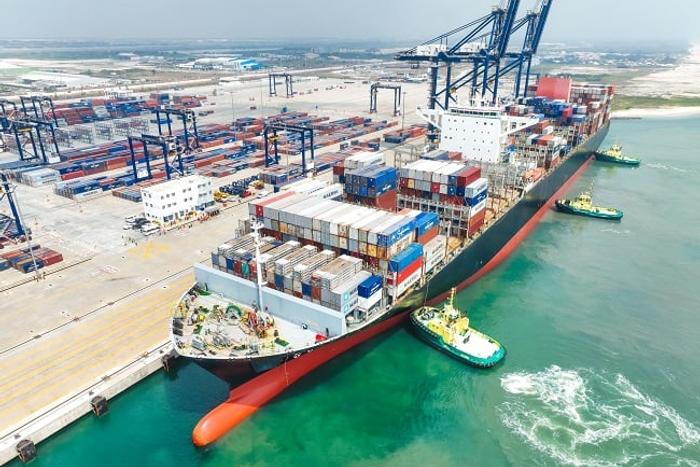
The Lagos State Government has announced that construction work on Phase 2 of the Lekki Deep Sea Port project is set to commence, marking a major step in the expansion of one of Nigeria’s most strategic maritime infrastructure developments.
According to state officials, the second phase of the project is expected to significantly increase the port’s capacity, enhance cargo handling efficiency, and strengthen Lagos’ position as a key trade hub in West Africa. The expansion is also projected to attract additional foreign investment and improve logistics performance across Nigeria’s import and export supply chains.
The Lekki Deep Sea Port, located within the Lekki Free Trade Zone, was developed as part of a public-private partnership aimed at addressing congestion at existing ports and improving maritime operations in the country. Phase 1 of the project is already operational and has begun handling containerized cargo and large vessels.
With Phase 2 now underway, the Lagos State Government says the focus will be on expanding terminal facilities, deepening berths, and improving access infrastructure, including road and logistics corridors that connect the port to major industrial and commercial centres across the state and beyond.
Officials explained that the expansion aligns with the state’s broader economic development agenda, which prioritizes infrastructure-driven growth, industrial expansion, and improved ease of doing business. The government believes the upgraded port facilities will reduce turnaround time for cargo and lower logistics costs for businesses operating in Nigeria.
The project is also expected to create thousands of direct and indirect jobs during the construction and operational phases, particularly in logistics, construction, shipping, and ancillary service sectors.
Industry experts have described the Phase 2 expansion as a critical development for Nigeria’s maritime sector, noting that the country continues to lose significant revenue due to inefficiencies and congestion at existing port facilities. They argue that modern deep sea port infrastructure is essential to meeting rising trade volumes and supporting economic diversification efforts.
Stakeholders in the shipping and logistics industry have welcomed the announcement, expressing optimism that the expanded Lekki Port will ease pressure on Apapa and Tin Can Island ports, which have long struggled with congestion, delays, and inadequate infrastructure.
They also highlighted the strategic importance of the Lekki corridor, which is rapidly emerging as a major industrial and commercial hub, hosting manufacturing plants, oil and gas facilities, and real estate developments.
According to project stakeholders, Phase 2 will incorporate advanced port technologies designed to improve efficiency, including digital cargo tracking systems, automated handling equipment, and enhanced security infrastructure to ensure smoother operations.
The Lagos State Government reaffirmed its commitment to ensuring timely delivery of the project, emphasizing the importance of strong collaboration between public institutions and private investors in achieving infrastructure goals.
Officials also noted that environmental and regulatory compliance will remain a key priority during the construction phase, with measures expected to mitigate the impact of port expansion activities on surrounding communities and ecosystems.
Economic analysts say the expansion of the Lekki Deep Sea Port is expected to have a ripple effect across multiple sectors of the economy, including manufacturing, agriculture exports, and retail distribution. Improved port efficiency, they argue, could also enhance Nigeria’s competitiveness in regional and global trade.
The Federal Government has also expressed support for the project, describing it as a strategic asset in Nigeria’s broader efforts to modernize transport infrastructure and strengthen maritime trade capacity.
As construction on Phase 2 prepares to begin, stakeholders remain optimistic that the project will mark a turning point in Nigeria’s port infrastructure development, improving trade efficiency and reinforcing Lagos’ status as the country’s commercial powerhouse.


