

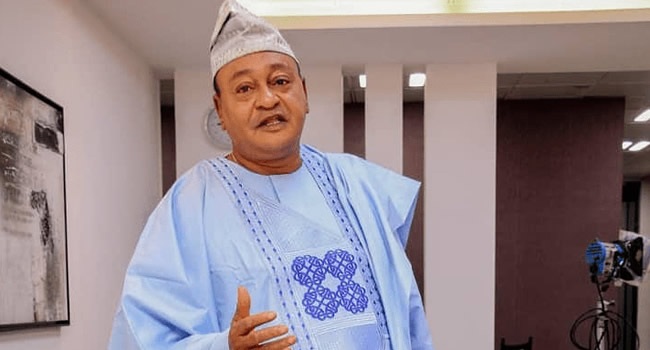
Veteran Nigerian actor, Jide Kosoko, has recalled the uncertainty that accompanied the rise of social media and digital content creation, saying he and some of his colleagues initially feared that the new platforms could take away their jobs.
Kosoko, one of the prominent figures in Nigeria’s film and theatre industry, reflected on how the entertainment landscape has changed over the years, particularly with the emergence of social media platforms that have transformed the way Nigerians create, distribute and consume content.
According to the veteran actor, the arrival of social media initially generated concerns among established practitioners who had built their careers around conventional television, cinema and other traditional forms of entertainment.
He explained that many older entertainers were uncertain about what the rapid growth of digital platforms would mean for their careers. At the time, social media was increasingly becoming a major avenue for people to produce and distribute their own content without depending heavily on traditional media organisations.
Kosoko noted that some practitioners feared that the growing popularity of online content creators could reduce opportunities available to professional actors and other established entertainers.
However, developments in the industry have shown that social media has not simply replaced traditional entertainment. Instead, it has created additional platforms through which actors, filmmakers and content creators can reach audiences.
The veteran actor’s recollection highlights the broader transformation of Nigeria’s entertainment industry, which has moved from an era dominated by television, cinema, home videos and physical distribution to one where digital platforms play an increasingly important role.
Social media has also lowered the barriers to content creation. Individuals can now produce videos with relatively affordable smartphones and distribute them to potentially millions of viewers through platforms such as YouTube, Instagram, Facebook, TikTok and X.
This transformation has created opportunities for a new generation of Nigerian entertainers and content creators. Many have built large audiences without initially having to secure traditional television contracts or major film roles.
For established actors such as Kosoko, the changes have required the entertainment industry to adapt to a new relationship between traditional performers and digital creators.
Rather than eliminating the careers of established entertainers, digital platforms have increasingly become tools for publicity, audience engagement and additional content distribution.
The development has also changed the way audiences interact with celebrities. Fans can now follow actors directly, watch behind-the-scenes material, access interviews and engage with performers almost instantly.
Nigeria’s entertainment industry has consequently become more interconnected, with traditional film and television personalities increasingly operating alongside social media influencers, skit makers and independent digital producers.
Kosoko’s reflection provides an insight into the apprehension that often accompanies technological change. New technologies frequently create fears about job displacement, particularly when they introduce cheaper or faster ways of producing content.
Yet the Nigerian entertainment experience demonstrates how such disruption can also generate new opportunities. Social media has expanded the number of people participating in the creative economy while giving established practitioners additional channels through which to connect with audiences.
For Kosoko and other veterans, the evolution of the industry represents a significant shift from the environment in which they began their careers. What was once viewed primarily as a potential threat has become an important part of the modern entertainment ecosystem.
The veteran actor’s comments therefore offer a reflection on how Nigeria’s entertainment industry has adapted to technological change, with traditional performers and emerging digital creators now occupying an increasingly interconnected media space.


