

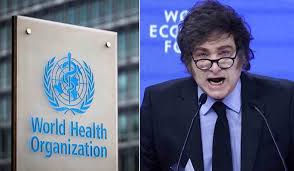
Argentina has officially announced plans to withdraw from the World Health Organization (WHO), a decision that has triggered international debate over public health cooperation, national sovereignty, and the future of global institutions.
The move follows closely behind a similar decision by the United States and signals growing skepticism among some governments toward international organizations and their influence on domestic policymaking.
Argentine authorities said the withdrawal reflects the country’s commitment to maintaining greater independence over national health decisions and reducing reliance on external institutions in matters affecting public policy.
The announcement has immediately drawn mixed reactions worldwide, with supporters praising the decision as a defense of sovereignty while critics warn it could weaken international health collaboration during future global emergencies.
Argentina Moves to End WHO Membership
Government officials confirmed that Argentina would begin the formal process of ending its membership in the World Health Organization, citing concerns about how global health agencies influence domestic decision-making.
According to government representatives, international bodies should not possess the authority to shape or pressure national governments into adopting policies that may not align with local realities and priorities.
Officials argued that Argentina must preserve its ability to respond independently to public health challenges without excessive international interference.
The withdrawal aligns with the current administration’s broader political philosophy, which emphasizes national autonomy, reduced foreign influence, and stronger domestic control over policymaking.
Supporters of the decision insist that Argentina should prioritize independent governance rather than depend heavily on multinational organizations.
However, critics fear the move could isolate the country from critical international health systems and reduce opportunities for cooperation during future crises.
U.S. Exit Influences Global Trend
Argentina’s withdrawal announcement comes after the United States also moved to distance itself from the WHO, raising speculation that additional countries could reconsider their participation in international organizations.
The American decision sparked intense global discussion because of the country’s major financial contributions to international health programs and emergency response initiatives.
Political analysts believe Argentina’s move reflects a broader global trend in which some governments are increasingly questioning the power and influence of multinational institutions.
In recent years, skepticism toward global organizations has grown significantly, especially following disagreements surrounding the management of the COVID-19 pandemic.
Debates over lockdowns, vaccine distribution, travel restrictions, and emergency public health measures intensified political divisions worldwide and fueled criticism of international health agencies.
For some leaders, those tensions strengthened calls for countries to maintain greater control over national decision-making during global crises.
WHO Faces Ongoing Criticism
The World Health Organization has remained under intense scrutiny since the COVID-19 pandemic, with critics accusing the organization of delayed responses and insufficient transparency during critical stages of global outbreaks.
Some governments and commentators have argued that the WHO became overly influenced by geopolitical interests and failed to act independently during major health emergencies.
Others questioned whether the organization responded quickly enough to prevent the rapid international spread of COVID-19.
Despite the criticism, many global health experts continue to defend the WHO as an essential institution for international cooperation in healthcare and disease prevention.
The organization has historically coordinated efforts against diseases such as Ebola, malaria, polio, and COVID-19 while also supporting vaccination campaigns, medical research, and emergency health responses in developing countries.
Health specialists warn that weakening global institutions could make it more difficult for nations to coordinate responses during future pandemics and cross-border health threats.
Concerns Over International Health Cooperation
Public health experts have expressed concern that Argentina’s departure could reduce international collaboration at a time when global cooperation remains essential for managing infectious diseases.
Experts note that pandemics and major outbreaks often require countries to share scientific data, coordinate medical research, exchange health information, and collaborate on emergency strategies.
International organizations like the WHO provide systems that help countries communicate and coordinate during rapidly evolving global crises.
Critics of Argentina’s decision argue that distancing itself from such structures may increase the country’s vulnerability during future emergencies.
Some analysts also fear the move could impact Argentina’s access to technical support programs, international medical partnerships, and collaborative disease monitoring systems.
Within Argentina itself, healthcare professionals appear divided over the issue.
While some doctors and public health advocates support stronger national control over health policy, others worry about the long-term implications of reduced engagement with international health networks.
Political Debate Deepens
The withdrawal has intensified political divisions both inside Argentina and internationally.
Supporters of the government describe the decision as a necessary step toward reclaiming national independence and reducing foreign influence over domestic affairs.
Many conservative commentators have praised the move as part of a broader effort to protect democratic sovereignty and prioritize local interests.
Others argue that countries should maintain complete authority over healthcare policies without pressure from global organizations.
Opposition politicians and critics, however, have condemned the withdrawal, warning that it could damage Argentina’s global standing and reduce international confidence in the country’s healthcare partnerships.
Some political analysts believe the decision reflects a wider ideological movement challenging global governance structures in areas such as climate policy, trade, immigration, and public health.
Economic and Healthcare Implications
Experts say Argentina’s departure from the WHO may carry significant political, healthcare, and economic consequences.
The country could potentially lose access to collaborative programs involving research, emergency preparedness, and international health coordination.
Questions have also emerged regarding how the withdrawal could affect future vaccine access, health funding opportunities, and scientific cooperation during emergencies.
Healthcare analysts emphasize that infectious diseases do not recognize borders, making international coordination crucial regardless of political differences between governments.
At the same time, supporters of the withdrawal argue that Argentina can still build direct partnerships with individual countries without remaining dependent on multinational organizations.
Government officials have stressed that leaving the WHO does not mean ending all international healthcare cooperation.
Sovereignty Versus Global Cooperation
Argentina’s withdrawal has become part of a larger global discussion about the balance between national sovereignty and international collaboration.
In recent years, several political movements worldwide have increasingly challenged the authority of multinational institutions in shaping domestic policy decisions.
Supporters of stronger national control argue that elected governments should retain full authority over healthcare, economic, and security policies without outside influence.
Critics, however, warn that modern global challenges such as pandemics, climate change, and economic instability require coordinated international responses.
The WHO debate now reflects these broader political and ideological tensions shaping international relations.
Questions Remain About Argentina’s Future Health Strategy
As Argentina moves forward with the withdrawal process, attention is turning toward how the government plans to manage future international health cooperation.
Officials insist that the country will continue engaging with foreign partners through bilateral agreements and independent health initiatives tailored to national priorities.
However, questions remain about how Argentina would respond to future global emergencies without direct participation in the WHO framework.
For now, the decision has placed Argentina at the center of a growing international debate about public health governance, sovereignty, and the role of global institutions in an increasingly polarized world.


