

By Ogbuefi Ndigbo
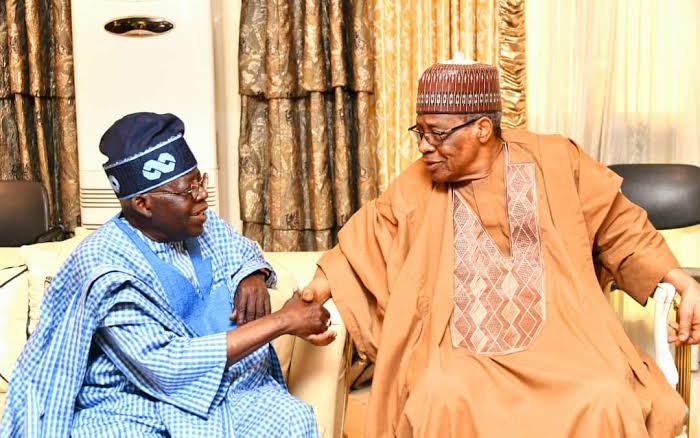
As debates over governance, performance, and political timelines intensify in Nigeria, a recurring question has returned to the national conversation: is four years sufficient to assess a president’s impact? Supporters of President Bola Ahmed Tinubu argue that patience is required, noting that deep structural reforms demand time to yield results. Critics, however, point to history—particularly the early years of former military president Ibrahim Badamasi Babangida (IBB)—to contend that decisive leadership can produce lasting outcomes within a short period.
The comparison, analysts note, goes beyond personalities. At its core are issues of pace, scale, and ambition in governance.
Tinubu’s Reform Agenda and Early Challenges
President Tinubu assumed office amid significant economic strain, including long-standing fuel subsidy distortions, foreign exchange instability, and declining public confidence in state institutions. Since taking office, his administration has pursued wide-ranging economic reforms such as fuel subsidy removal, foreign exchange unification, fiscal tightening, and public sector restructuring.
While these policies have been welcomed in some policy and investor circles, they have also brought short-term hardship for citizens, with rising living costs and limited immediate relief. Critics argue that the reforms have yet to translate into large-scale infrastructure delivery or broad-based job creation.
The ruling All Progressives Congress (APC) maintains that the president requires more than one term to stabilize the economy and deliver tangible benefits, a position that has drawn scrutiny in light of Nigeria’s historical experience with rapid state-led development.
Babangida’s Era: Speed and Structural Expansion
Although Babangida’s administration remains controversial, observers acknowledge its far-reaching institutional and infrastructural footprint, much of which was established within a relatively short timeframe. Supporters of the comparison argue that his government permanently reshaped Nigeria’s political and administrative landscape through expansive state creation, security sector reforms, and large-scale infrastructure development.
Under Babangida, 11 states were created—Yobe, Katsina, Taraba, Jigawa, Kebbi, Enugu, Edo, Delta, Osun, Akwa Ibom, and Kogi—triggering the expansion of civil services, legislatures, judiciaries, and local government structures that continue to generate employment decades later.
His administration also laid the foundation for Nigeria’s modern security and intelligence architecture with the establishment of agencies such as the Federal Road Safety Corps (FRSC), State Security Service (SSS), National Intelligence Agency (NIA), Defence Intelligence Agency (DIA), and the National Drug Law Enforcement Agency (NDLEA).
Infrastructure and Institutional Legacy
Babangida’s tenure is further associated with landmark infrastructure projects, including the Third Mainland Bridge, Aso Rock Presidential Villa, the ECOWAS Secretariat, National Assembly Complex, International Conference Centre, Central Bank of Nigeria headquarters, and early phases of the Nnamdi Azikiwe International Airport in Abuja.
Much of Abuja’s core districts—Maitama, Asokoro, Wuse, Jabi, and the Central Area—along with water systems, hospitals, and government secretariats, were developed at scale during this period, forming the backbone of Nigeria’s federal capital.
In the power and industrial sectors, projects such as the Shiroro Hydroelectric Power Station, early works on the Ajaokuta Steel Complex, the Aluminium Smelter Company in Ikot Abasi, and multiple dam and water schemes were launched to support industrialization and urban growth.
Beyond physical infrastructure, Babangida’s government introduced social and economic institutions aimed at grassroots participation, including the Peoples Bank of Nigeria and the Directorate of Food, Roads and Rural Infrastructure (DFRRI), alongside nationwide housing schemes and federal secretariats.
A Broader Question of Governance
Analysts caution that the comparison is not an endorsement of military rule nor a dismissal of the controversies associated with the Babangida era. Rather, it reflects growing public impatience with slow delivery and a demand for measurable outcomes under democratic governance.
For many Nigerians, the central issue is whether contemporary administrations, operating in a democratic setting, can match the speed, coordination, and permanence of past large-scale state interventions.
As President Tinubu’s tenure continues, the Babangida years increasingly serve as a reference point in public discourse—controversial but widely viewed as productive. Ultimately, observers note, citizens are less concerned with timelines than with results, and history may judge today’s leadership by its ability to convert reform promises into enduring national impact.


