

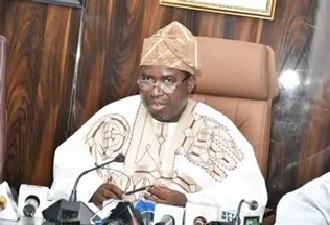
President Bola Ahmed Tinubu has expressed confidence in the Independent National Electoral Commission (INEC), dismissing criticisms from opposition parties and accusing them of raising unfounded concerns about the electoral body.
Speaking on the state of Nigeria’s electoral process, the President gave INEC what observers described as a clean bill of health, insisting that the commission has continued to perform its constitutional responsibilities despite persistent criticism from political opponents.
Tinubu argued that allegations against the electoral commission were largely politically motivated, accusing opposition parties of “crying wolf” rather than presenting credible evidence to support their claims.
According to the President, Nigeria’s democracy can only be strengthened when political actors respect independent institutions and allow them to operate without unnecessary political pressure.
He maintained that INEC remains central to the conduct of free, fair and credible elections and urged Nigerians to continue supporting democratic institutions established under the Constitution.
The President’s remarks come amid ongoing debates over electoral reforms, the performance of the electoral commission and preparations for future elections, particularly as political activities ahead of the 2027 general elections continue to gather momentum.
Several opposition parties have, in recent months, expressed concerns about aspects of Nigeria’s electoral process, calling for improvements in election management, greater transparency and further reforms to strengthen public confidence in the system.
The opposition has also urged INEC to address issues relating to voter registration, technology deployment, result management and logistics, arguing that continuous improvements are necessary to enhance the credibility of future elections.
However, Tinubu insisted that criticism of democratic institutions should be constructive and evidence-based, warning against what he described as attempts to undermine public confidence through unsubstantiated allegations.
Political analysts note that the independence of INEC remains a recurring issue in Nigeria’s democratic discourse, with both ruling and opposition parties frequently scrutinizing the commission’s conduct before and after elections.
They argue that while public oversight is essential in a democracy, confidence in the electoral process ultimately depends on transparent administration, adherence to electoral laws and cooperation among political stakeholders.
Election observers have consistently emphasized the need for continuous reforms, improved voter education, technological innovation and institutional capacity building to strengthen Nigeria’s electoral system.
Observers also believe that the exchange between the Presidency and opposition parties reflects the increasingly competitive political environment ahead of the 2027 elections, where debates over electoral integrity are expected to feature prominently.
As preparations for future polls continue, stakeholders have called on all political parties, candidates and institutions to uphold democratic principles, respect the rule of law and work collectively to ensure peaceful, credible and inclusive elections across the country.
Tinubu reaffirmed his administration’s commitment to supporting democratic institutions, expressing confidence that INEC will continue to discharge its constitutional mandate in the interest of Nigeria’s democracy.


