

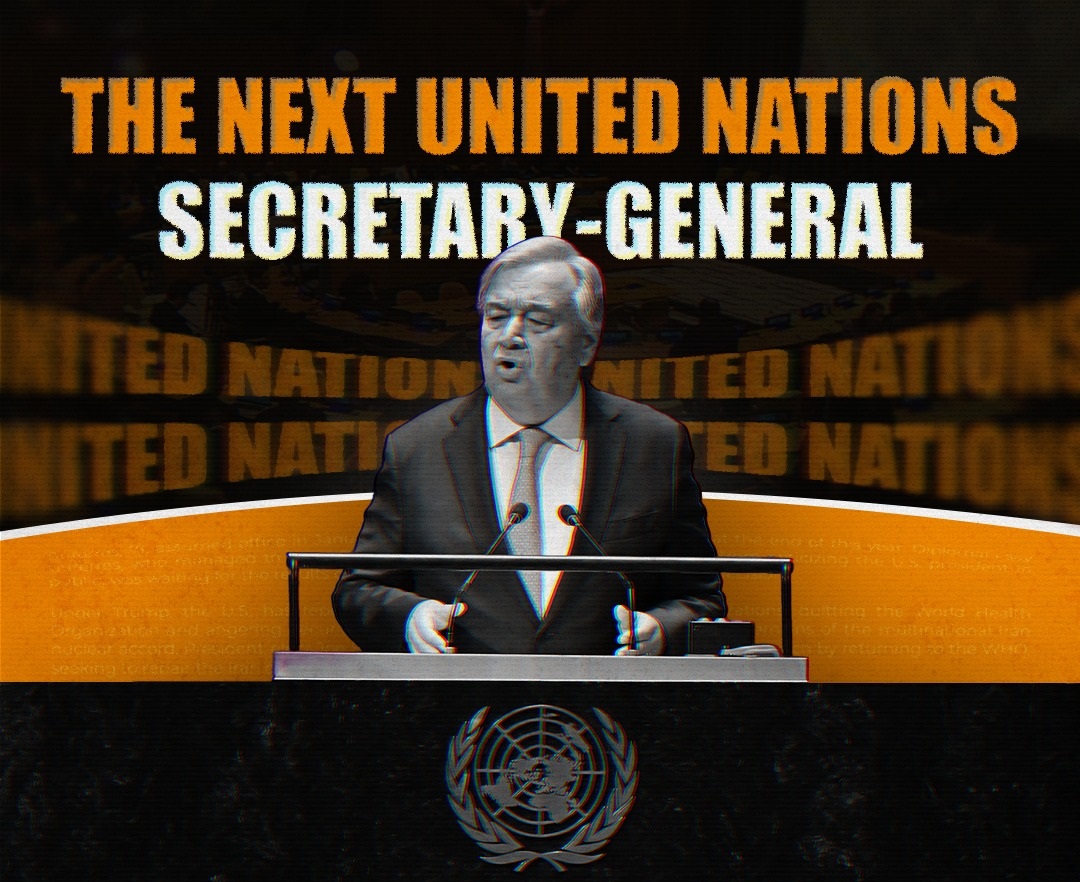
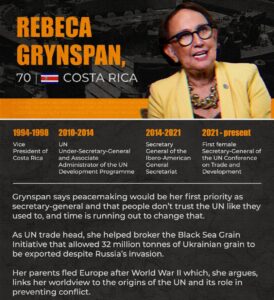
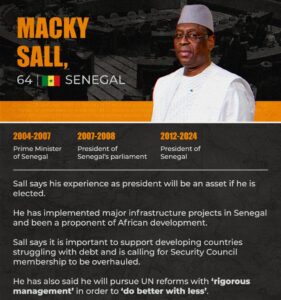
The race to succeed Antonio Guterres as Secretary-General of the United Nations is gradually taking shape, with four candidates already stepping forward in what is widely regarded as one of the most demanding leadership selection processes in global diplomacy.
The position of UN Secretary-General is often described as the world’s toughest job interview—not only because of its global visibility, but also due to the complex balancing act required among powerful member states, especially the five permanent members of the Security Council.
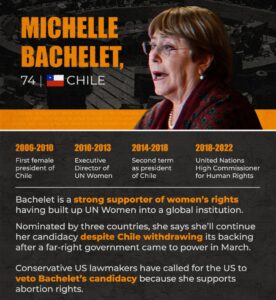
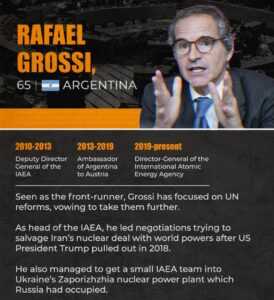
While the full list of candidates is still evolving ahead of the final selection expected later this year, the individuals who have declared their interest so far represent a mix of diplomatic experience, regional diversity, and international policy expertise. Traditionally, candidates emerge from senior political, diplomatic, or multilateral leadership roles, with strong backing from their home countries and regional blocs.
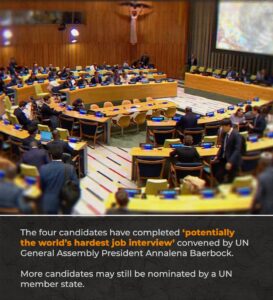
The selection process itself is both formal and informal. Officially, candidates are nominated by member states and subjected to a series of informal dialogues and hearings at the UN General Assembly. Unofficially, however, the decisive stage lies within the UN Security Council, where any of the five permanent members—the United States, China, Russia, the United Kingdom, and France—can veto a candidate.
This geopolitical reality often makes consensus-building the most critical factor in determining who ultimately secures the role.
The next Secretary-General will assume office in January, at a time when the world faces mounting challenges, including geopolitical tensions, climate change, economic instability, and ongoing conflicts in several regions. As such, expectations are high for a leader capable of navigating complex international crises while maintaining the UN’s credibility and neutrality.
Observers note that regional rotation could play a role in the selection. There have been increasing calls for the position to go to a candidate from regions that have historically been underrepresented in the role, particularly Eastern Europe or Africa.
In addition, there is renewed advocacy for gender balance, with many stakeholders urging member states to seriously consider female candidates for the position—something that has never occurred in the UN’s history.
The coming months are expected to see more candidates declare their intentions, intensifying diplomatic negotiations behind the scenes. Public hearings and policy discussions will also provide insight into each candidate’s vision for the future of the UN.
As the process unfolds, global attention will remain fixed on New York, where one of the most consequential leadership decisions in international governance is set to take place.


