

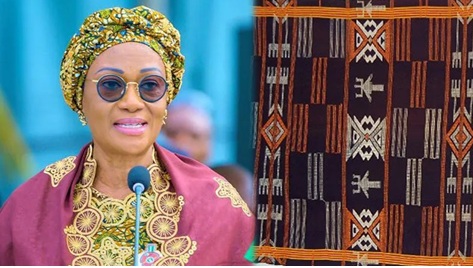
Nigeria’s First Lady, Senator Oluremi Tinubu, has announced a ₦2 billion donation to support the revitalisation of the historic Akwete weaving industry in Abia State, describing the initiative as a major investment in cultural preservation, women’s empowerment and economic development.
The announcement was made during her first official visit to the Akwete Weavers Village, home to one of Nigeria’s oldest indigenous textile traditions. The centuries-old craft is renowned for producing handwoven Akwete fabric using cotton, raffia and silk on traditional vertical looms.
Speaking during the visit, the First Lady said the intervention would be used to establish a modern production facility aimed at increasing output, creating employment opportunities and preserving the rich cultural heritage associated with Akwete weaving.
She noted that modernising the industry would enable local artisans to compete more effectively in both domestic and international markets while providing sustainable livelihoods for women and young people engaged in the craft.
According to Mrs. Tinubu, the investment aligns with broader efforts to promote local industries, encourage entrepreneurship and strengthen Nigeria’s creative and cultural economy.
The donation is also expected to complement the Abia State Government’s plans to establish a large-scale training and marketing hub for Akwete textiles. Governor Alex Otti has consistently advocated greater investment in the sector, describing the weaving tradition as a valuable cultural and economic asset capable of generating employment and attracting tourism.
During the event, the First Lady expressed confidence in the future of the industry and pledged her personal support for promoting Akwete fabric on national and international platforms. She also remarked that she would proudly wear Akwete attire if President Bola Ahmed Tinubu secures re-election in the 2027 general election, a statement that drew applause from participants at the gathering.
In recognition of her support for women’s development and the preservation of cultural heritage, traditional rulers in Abia State conferred on Mrs. Tinubu the honorary title “Ugo Nwanyi Abia”, a distinction celebrating her contributions to the empowerment of women and promotion of indigenous values.
The announcement has generated varied reactions among Nigerians. Supporters described the donation as a timely intervention that could revive a declining traditional industry, preserve cultural identity and stimulate economic activity within local communities.
Others, however, called for greater clarity regarding the source of the funding and the mechanisms that will be put in place to ensure transparency, accountability and effective implementation of the project.
Development experts note that investments in indigenous industries can contribute significantly to job creation, skills development and export diversification. They argue that supporting traditional crafts such as Akwete weaving not only preserves cultural heritage but also creates opportunities for small-scale enterprises and rural economic growth.
Cultural historians also emphasise that Akwete fabric remains one of Nigeria’s most distinctive indigenous textiles, with a history spanning several centuries. They believe sustained investment, improved marketing and modern production techniques could position the fabric as a globally recognised cultural brand.
As implementation of the initiative begins, stakeholders have urged both federal and state authorities to ensure that the funds are managed transparently and that local weavers remain the primary beneficiaries of the programme.
Observers say the success of the project could serve as a model for revitalising other indigenous crafts across Nigeria, demonstrating how cultural heritage can be leveraged to promote inclusive economic development while preserving the nation’s rich artistic traditions.


