

The Federal Ministry of Finance has rejected claims that the Federal Government spent more than ₦8 trillion outside the approved national budget, describing the allegation as inaccurate and a misrepresentation of recent observations contained in the International Monetary Fund’s (IMF) 2026 Article IV Consultation.
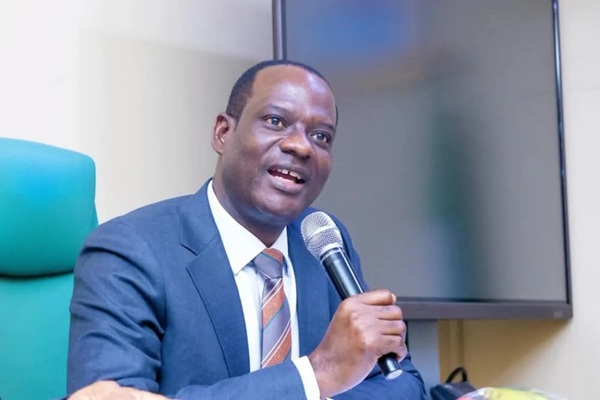
In a statement issued on Saturday, the Minister of Finance and Coordinating Minister of the Economy, Taiwo Oyedele, said the Federal Government does not operate a “shadow budget” and that all public expenditures are made within the constitutional and legal framework governing Nigeria’s public finances.
According to the ministry, the Constitution permits the withdrawal and expenditure of public funds only through duly enacted Appropriation Acts, Supplementary Appropriation Acts, statutory transfers, and other legal authorisations approved by the National Assembly.
The statement explained that certain government expenditures—including statutory transfers, debt servicing, capital projects implemented over multiple budget cycles, interventions for national security and emergencies, and allocations to agencies established by law—may be presented differently in fiscal reports from how they appear in annual appropriation documents.
The ministry stressed that these differences in classification and reporting should not be interpreted as evidence of unlawful or undisclosed government spending.
Responding to suggestions that the reported amount represented an increase in Nigeria’s fiscal deficit, the Finance Ministry stated that a budget deficit is determined by the relationship between total government revenue and total expenditure, not by the financing mechanism or reporting classification of authorised spending.
The statement further noted that the IMF’s observations primarily concern the comprehensiveness, timing, and presentation of fiscal reporting rather than the legality of government expenditure.
The ministry also recalled that President Bola Ahmed Tinubu had previously requested the National Assembly to harmonise overlapping budget frameworks into a single, more comprehensive fiscal structure as part of broader public financial management reforms.
According to the government, recent reforms have strengthened treasury management, improved revenue administration, expanded the digitalisation of public financial processes, and enhanced budget credibility. It added that these efforts have received positive recognition from international financial institutions and credit rating agencies.
While affirming that public debate on government finances is essential in a democratic society, the ministry urged commentators to distinguish between technical fiscal reporting standards and allegations of illegal expenditure.
The Federal Government reiterated its commitment to transparency, accountability, prudent fiscal management, and continued collaboration with the National Assembly, oversight institutions, development partners, and citizens to strengthen Nigeria’s public financial management system in line with international best practices.


