

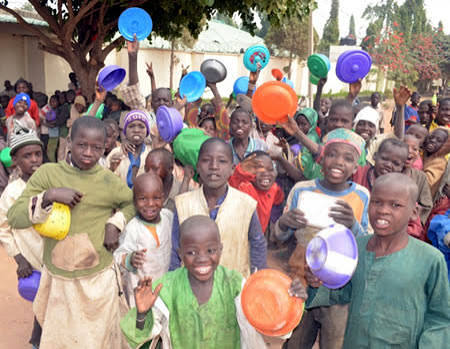
The inclusion of road construction projects in the 2026 budget of the National Commission for Almajiri and Out-of-School Children Education (NCAOOSCE) raises serious questions about budget credibility, institutional accountability, and the proper use of public funds.
If the Commission’s statutory mandate is to provide education and related interventions for Almajiri and out-of-school children, Nigerians deserve clear answers to the following questions:
How does the construction of roads in Ekiti, Ogun and Katsina States directly advance the Commission’s mandate of educating Almajiri and out-of-school children?
If the projects are constituency projects, why were they assigned to an education-focused Commission instead of the Federal Ministry of Works or another agency with the legal mandate and technical capacity to execute road construction?
What objective criteria were used to determine that the National Commission for Almajiri and Out-of-School Children Education should oversee ₦8.4 billion worth of road projects?
How many Almajiri schools or out-of-school children’s learning centres could have been built, renovated or equipped with the ₦8.4 billion earmarked for roads?
What proportion of Nigeria’s estimated out-of-school children will directly benefit from these road projects?
Why are community health facilities, ambulances, medical equipment, solar street lights, boreholes and other civic infrastructure being funded through the budget of an education Commission instead of the relevant ministries and agencies?
Does assigning projects unrelated to the Commission’s core mandate not undermine transparency, accountability and effective public financial management?
Was the Commission consulted before these projects were inserted into its budget, and did it recommend or request them?
Which lawmakers nominated these projects, and will their identities and the project locations be made public in the interest of transparency?
How will the Federal Government measure the success of these road projects against the statutory objectives of reducing the number of Almajiri and out-of-school children?
If the government argues that the projects are legal because they were appropriated by the National Assembly, does legality alone justify assigning projects to agencies whose mandates do not align with those projects?
With millions of Nigerian children still out of school, why was a significant portion of the Commission’s capital budget not prioritised for classrooms, teachers, learning materials, school feeding, vocational education and other interventions directly related to its mandate?
Nigerians are entitled to a budgeting process that reflects fiscal discipline, institutional responsibility and value for money. The issue is not simply whether these projects were lawfully appropriated, but whether they represent prudent public policy and faithful implementation of the Commission’s statutory mandate.
The Federal Government, the National Assembly and the National Commission for Almajiri and Out-of-School Children Education owe Nigerians a full explanation of how these allocations serve the interests of the children the Commission was established to support.


